
What is Brazilian Jiu Jitsu?
Wat is Brazilian Jiu Jitsu? Complete gids voor beginners
Wat is Brazilian Jiu Jitsu? Een introductie tot de vechtsport
Ontdek de basis van Brazilian Jiu Jitsu, een vechtsport die techniek en strategie combineert. Leer meer over de voordelen en technieken. Lees nu!
Brazilian Jiu Jitsu (BJJ) is een grondgevecht-gebaseerde vechtsport die zich richt op positiecontrole en submissies, waarbij techniek en hefboomwerking belangrijker zijn dan brute kracht. Deze Braziliaanse aanpassing van traditioneel judo en jiu jitsu werd ontwikkeld door de Gracie familie en heeft bewezen dat een kleinere, zwakkere persoon een sterkere tegenstander kan verslaan door superieure techniek.
Deze complete gids legt uit wat brazilian jiu jitsu precies inhoudt, van de basisprincipes tot de praktische trainingsopzet, zodat beginners een helder beeld krijgen van deze fascinerende vechtsport.
Wat deze gids behandelt
Je leert de definitie en kernprincipes van brazilian jiu jitsu, de rijke geschiedenis van Japan naar Brazilië, hoe een typische training eruitziet, en praktische stappen om te beginnen. We behandelen geen geavanceerde technieken of specifieke gym aanbevelingen.
Voor wie is deze gids bedoeld
Deze gids is ontworpen voor complete beginners die niets weten over brazilian jiu jitsu, ouders die overwegen hun kinderen te laten trainen, en fitness enthousiasten die een nieuwe passie zoeken. Of je nu interesse hebt in zelfverdediging of gewoon nieuwsgierig bent naar deze kunst, je vindt hier alle basisinformatie.
Waarom dit belangrijk is
BJJ biedt unieke voordelen voor zelfverdediging, fysieke conditie en mentale ontwikkeling. In tegenstelling tot veel andere vechtsporten kun je Brazilian jiu jitsu beoefenen ongeacht je leeftijd, geslacht of fysieke gesteldheid, omdat de nadruk ligt op techniek in plaats van kracht.
Wat je zult leren:
- De fundamentele principes die BJJ onderscheiden van andere vechtsporten
- De fascinerende geschiedenis van de Gracie familie en moderne ontwikkeling
- Hoe een BJJ training eruitziet en wat je kunt verwachten
- Vergelijking met andere vechtkunsten om je keuze te helpen maken
What is Brazilian Jiu Jitsu?
Brazilian Jiu Jitsu is een vechtsport die voornamelijk richt op grondgevecht, waarbij de beoefenaar leert een tegenstander te controleren en te laten aftikken via verwurgingen en klemmen. BJJ stamt af van traditioneel Japans jiu jitsu en Kodokan judo, maar werd in de vroege 20e eeuw aangepast door de Braziliaanse Gracie familie tot een praktisch zelfverdedigingssysteem.
Het doel van brazilian jiu jitsu is om een gevecht naar de grond te brengen en daar een dominante positie te bereiken waaruit je veilig submissies kunt toepassen. Deze discipline is geschikt voor alle leeftijden - mannen, vrouwen en kinderen kunnen effectief BJJ trainen omdat techniek en strategie belangrijker zijn dan fysieke kracht.
Kernprincipes van BJJ
Het belangrijkste principe van brazilian jiu jitsu is hefboomwerking: door correcte techniek kan een kleinere persoon een veel grotere en sterkere tegenstander controleren en verslaan. Dit gebeurt door gebruik te maken van lichaamsmechanica, gewichtsverplaatsing en precisie in plaats van brute kracht.
Controle en geduld staan centraal in BJJ. In plaats van te steunen op snelle, explosieve bewegingen zoals in boksen of kickboksen, leren beoefenaars systematisch positiecontrole op te bouwen en kansen af te wachten. Dit principe maakt BJJ uniek onder de vechtsporten.
Doelstellingen en technieken
Het primaire doel is je tegenstander te dwingen af te tikken door middel van submissies - technieken die pijn of bewusteloosheid dreigen te veroorzaken. De hoofdcategorie van technieken omvat verwurgingen (die de bloedtoevoer naar de hersenen beperken) en gewrichtsklemmen die armen, benen of andere lichaamsdelen overextensie dreigen.
Voortbouwend op de hefboomprincipes, passen deze technieken specifieke lichaamsmechanica toe. For example, een armklem gebruikt de heup als hefboom tegen de elleboog, terwijl verwurgingen de onderarm en biceps inzetten om druk uit te oefenen op halsslagaders.
Overgang: Nu we de fundamenten begrijpen, is het tijd om te ontdekken hoe deze unieke vechtsport ontstond en evolueerde van een Japanse traditie naar een wereldwijd fenomeen.
Geschiedenis en oorsprong van BJJ
De geschiedenis van brazilian jiu jitsu begint in Japan maar wordt getransformeerd door Braziliaanse innovatie, wat leidt tot een revolutie in hoe we naar vechten en zelfverdediging kijken.
Van Japan naar Brazilië (1914-1925)
Mitsuyo Maeda, een judoka van Jigoro Kano’s Kodokan judo, emigreerde naar Brazilië in 1914. Maeda, ook bekend als Count Koma, gaf demonstraties van zijn vechtkunst en leerde lokale studenten de principes van Japans jiu jitsu en judo.
Carlos Gracie werd een van Maeda’s studenten en opende in 1925 de eerste jiu jitsu academie in Brazilië. Carlos paste de traditionele Japanse technieken aan voor praktische zelfverdediging, met meer nadruk op grondgevecht dan op de worpen die centraal stonden in judo.
De gracie familie revolutie
Helio Gracie, de jongere broer van Carlos, werd de meest succesvolle zoon van de familie in het ontwikkelen van wat nu bekend staat als Gracie Jiu Jitsu. Helio’s lichte gestalte dwong hem om traditionele technieken aan te passen, waarbij hij de focus verschoof naar efficiëntie en hefboomwerking in plaats van kracht.
Deze aanpassingen werden de kernfilosofie van brazilian jiu jitsu. Helio’s innovaties bewezen dat technische precisie en strategie effectiever konden zijn dan fysieke dominantie, een principe dat de basis vormt voor moderne BJJ.
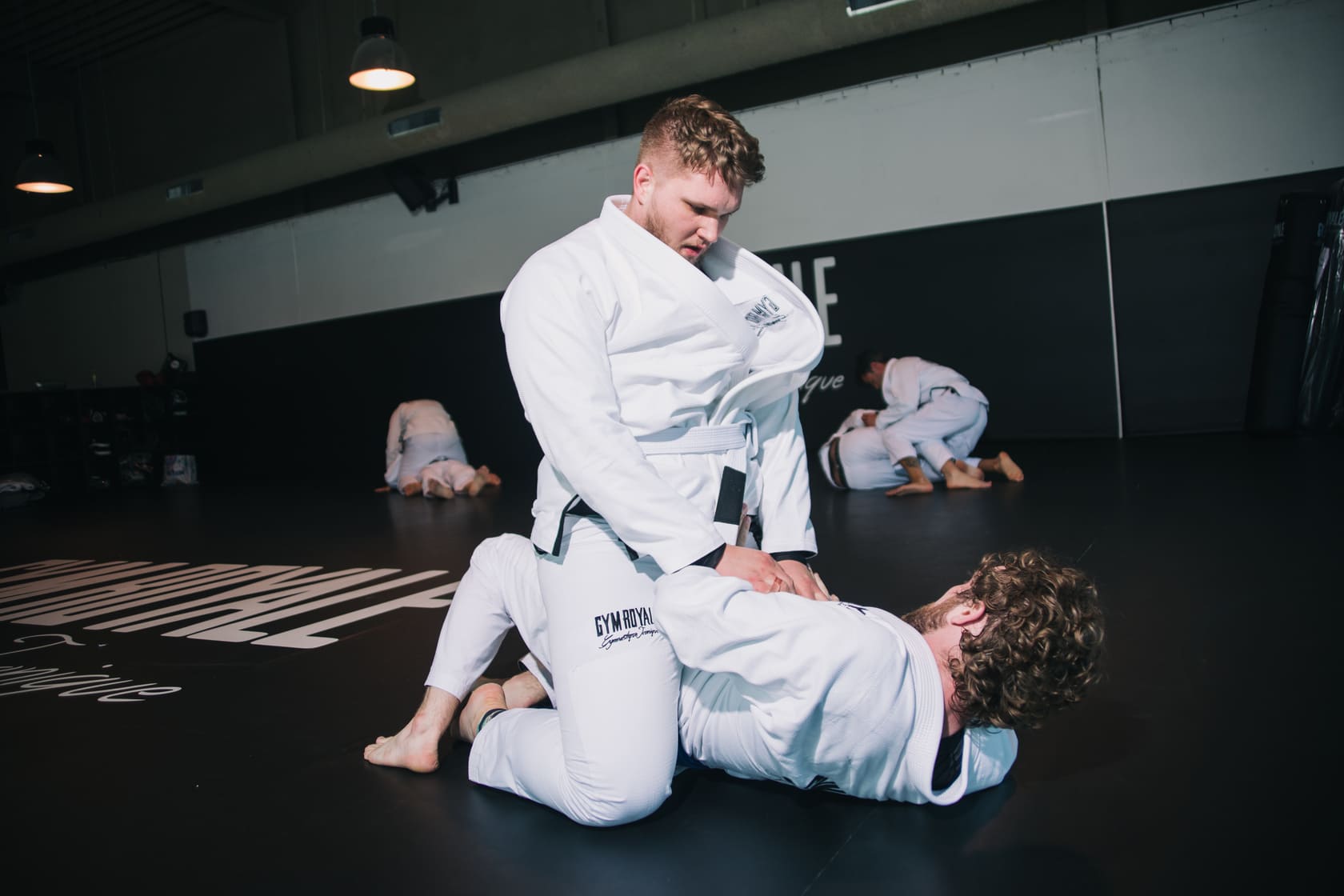
Een groep vechtsporters traint in een traditionele dojo met tatami matten, terwijl ze technieken van braziliaans jiu jitsu oefenen. De sfeer is geconcentreerd en vol discipline, met een nadruk op grondgevechten en zelfverdediging.
Moderne ontwikkeling en impact van UFC
Rickson Gracie en andere familieleden brachten BJJ naar internationale erkenning, maar de echte doorbraak kwam in 1993 toen Royce Gracie de Ultimate Fighting Championship (UFC) won. Royce toonde aan dat brazilian jiu jitsu superieur was aan traditionele vechtstijlen zoals karate, boksen en worstelen in een realistische gevechtsomgeving.
Dit succes in mixed martial arts (MMA) en vale tudo wedstrijden maakte BJJ tot een essentieel onderdeel van moderne zelfverdediging en vechtsport. Afgelopen jaren is brazilian jiu jitsu uitgegroeid tot een wereldwijde discipline met eigen wedstrijden, toernooien en competitions.
Overgang: Met dit historische fundament kunnen we nu onderzoeken hoe BJJ training er in de praktijk uitziet en wat beginners kunnen verwachten.
BJJ training en praktijk
Brazilian jiu jitsu training combineert technische instructie, herhaalde oefening en live sparring om beoefenaars praktische vaardigheden te ontwikkelen die werken tegen volledig resistente tegenstanders.
Stap voor stap: Typische BJJ Les
Wanneer van toepassing: Voor beginners die overwegen te starten met brazilian jiu jitsu training
- Warming-up en bewegingsvoorbereiding: Specifieke BJJ bewegingen zoals rollen, kruipen en basisposities om het lichaam voor te bereiden op grondgevecht
- Techniekdemonstratie door instructeur: Gedetailleerde uitleg van 1-3 technieken met stap-voor-stap breakdown en belangrijke details
- Drillen met partner: Langzaam tempo herhaling van geleerde technieken met een coöperatieve partner om muscle memory te ontwikkelen
- Positioneel sparren en vrije rolling: Live oefening waarbij partners met volledige weerstand de geleerde technieken toepassen
Vergelijking: BJJ vs andere vechtsporten
| Kenmerk | BJJ | Judo | Karate |
| Primaire Focus | Grondgevecht en submissies | Worpen en pins | Stoten en trappen |
| Techniek vs Kracht | 90% techniek | 60% techniek | 50% techniek |
| Beginnersvriendelijkheid | Hoog - langzame progressie | Medium - explosieve bewegingen | Medium - coordinatie vereist |
Brazilian jiu jitsu onderscheidt zich door de nadruk op techniek boven fysieke attributen, waardoor het toegankelijker is voor beginners van alle niveaus en leeftijden. De focus op grondgevecht maakt het ook praktischer voor realistische zelfverdedigingsituaties dan staande vechtkunsten.
Overgang: Hoewel BJJ toegankelijk is, komen beginners wel specifieke uitdagingen tegen die belangrijk zijn om te begrijpen.
Veelvoorkomende uitdagingen voor beginners
Nieuwe beoefenaars van brazilian jiu jitsu staan voor unieke fysieke en mentale uitdagingen die verschillen van andere sporten en activiteiten.
Uitdaging 1: fysieke intensiteit en conditie
Oplossing: Begin langzaam en focus op correcte techniek in plaats van kracht - conditie ontwikkelt zich natuurlijk door consistente training.
BJJ gebruikt spiergroepen en bewegingspatronen die onbekend zijn voor de meeste mensen. De intensieve grondgevecht en constante beweging kunnen overweldigend zijn, maar aanpassing gebeurt sneller dan verwacht bij regelmatige lessen.
Uitdaging 2: complexiteit van technieken
Oplossing: Concentreer je op fundamentele technieken en accepteer dat herhaling de sleutel is tot beheersing - niemand leert BJJ snel.
De veelheid aan posities, overgangen en submissies kan verwarrend lijken. Ervaren instructeurs structureren het leerproces zodat beginners geleidelijk complexere concepten begrijpen zonder overweldigd te raken.
Uitdaging 3: mentale barrière en vertrouwen
Oplossing: Accepteer verlies en aftikken als natuurlijke leermomenten - vertrouw het proces en focus op langetermijnprogressie.
Het is normaal om maandenlang regelmatig af te tikken tegen ervaren partners. Deze nederigheid en het accepteren van ongemak zijn essentieel voor groei in brazilian jiu jitsu en ontwikkelen uiteindelijk zelfvertrouwen.
Overgang: Met begrip van deze uitdagingen ben je klaar voor de praktische stappen om je BJJ reis te beginnen.
Onze conclusie en volgende stappen
Brazilian jiu jitsu biedt een unieke combinatie van fysieke uitdaging, mentale ontwikkeling en praktische zelfverdedigingsvaardigheden. Deze Braziliaanse vechtsport toont aan dat techniek en intelligentie kunnen triomferen over brute kracht, waardoor het toegankelijk wordt voor iedereen ongeacht fysieke attributen.
Om te beginnen:
- Zoek een lokale BJJ academie: Bezoek verschillende scholen om de sfeer en lesstijl te vergelijken
- Plan een proefles: Meeste academies zoals die van ons bieden gratis proeflessen waar je kunt ervaren hoe training eruitziet
- Investeer in een gi: Na enkele lessen kun je een training gi aanschaffen voor reguliere deelname aan lessen

Word lid en profiteer van onze exclusieve korting
Word nu lid en profiteer van onze exclusieve korting
Sluit je vandaag nog aan bij Gym Royale en maak direct gebruik van onze tijdelijke ledenkorting. Ontdek een moderne trainingsomgeving, professionele begeleiding en alles wat je nodig hebt om jouw doelen te bereiken.
Wacht niet te lang. Meld je nu aan en ontvang direct voordeel op jouw lidmaatschap.
Bekijk hier alle deals en claim jouw korting.
Kickboxing for beginners
Kickboxing for beginners
Kickboxing for beginners: first lesson, tips & preparation.
Start kickboxing! Read all about kickboxing for beginners: initial training, proper equipment, practical tips and how often to exercise.
Kickboxing for beginners: everything you need to know
Kickboxing for beginners is often exciting: How does kickboxing work, what should you bring, and how do you properly prepare for your first workout? The great thing is: everyone starts somewhere. With the right preparation, practical tips and an open attitude, you can soon enjoy your first kickboxing class.
The first step: starting well prepared
Taking the first step is often the most difficult, but also the most important. For your first lesson, you don't need to be in good shape or have experience with boxing. No one expects you to be able to do everything right away.
What is important:
- Come well prepared in comfortable sportswear.
- Eat a light, healthy meal and do not train on a full stomach.
- Bring a bottle of water and a towel.
These practical tips will ensure that you are relaxed and confident about your first time.
Try different classes
Every gym teaches kickboxing differently. Sometimes the emphasis is on fitness training, other times on technique or even light sparring. It's smart to try different classes so you discover what suits you.
- Some classes focus mainly on punching bags and punching bag training.
- Other classes are more like boxing training, focusing on punches and footwork.
- For beginners, there are often separate groups where the intensity and pace are lower.
This is how you learn your preferences and can stay motivated to exercise.
Proper preparation and gear
For the first time, you can often borrow from the gym: gloves, bandages and sometimes shin guards. Still, it's wise to purchase your own gear after a few weeks.
Essential to have as a beginner:
- Boxing gloves: protect your knuckles from the blows of the punching bag.
- Bandages: give extra protection to your wrists and hands.
- Shin guards: useful once you start practicing kicks or sparring.
- Sportswear: make sure you have comfortable sportswear in which you can move easily.
With good equipment and your own gear, you train more pleasantly, hygienically and safely.
What to expect at your first kickboxing class
During your first workout or first kickboxing class, the build-up often looks like this:
- Warm-up: dynamic movement, jumping rope, push-ups and squats.
- Technique: practice simple punches and kicks with a trainer.
- Boxing bag training: perform combinations on the punching bag or with pads.
- Strength training: basic muscle strength exercises such as push-ups and sit-ups.
- Cooling-down: stretching and breathing to get the tension out of your body.
Important: beginners make mistakes, that's part of the game. Keep practicing and be patient - technique is learned step by step.
Is kickboxing a technical sport?
Yes, kickboxing is a technical sport. A trainer helps you with proper stance, punches and footwork. It is not only physically, but also mentally challenging. You learn to deal with intensity, focus and tension, as well as discipline and self-control.
Kickboxing how often as a beginner?
Many beginners wonder: how often is kickboxing going to be good for me? Training two to three times a week is ideal. This is how you build:
- Conditioning and endurance on.
- Muscle strength through repetition and strength training.
- Self-confidence, because you see progress step by step.
Exercising regularly will keep you motivated and reduce the risk of injury.
Sparring, competitions and advanced
As you progress, you can start sparring under the guidance of a trainer. In this you practice techniques against an opponent, but always with protection and control.
For those who wish to continue:
- You can grow into an athlete competing in the ring.
- For advanced students, the emphasis is more on mental strength, intensity and technique.
- But for most beginners, it's about having fun, exercising and gaining confidence in your own abilities.
Conclusion
Kickboxing for beginners is all about learning one step at a time. The first step is exciting, but with proper preparation, practical tips and using your own gear, every first time will be easier.
Remember: everyone starts somewhere. By taking different classes, continuing to train and seeing mistakes as learning moments, you will not only develop strength and conditioning, but also self-confidence and mental toughness.
Kickboxing is a sport that makes you stronger physically and mentally - and above all, it provides fun.
Hyrox training schedule & exercises for beginners
Hyrox is een sport die wereldwijd steeds meer fans trekt. Het combineert 8 keer 1 kilometer hardlopen met intensieve functionele oefeningen. Tijdens een wedstrijd leg je een compleet Hyrox-circuit af. Dat daagt je zowel fysiek als mentaal uit. Maar hoe ziet een Hyrox-training eruit? Welke oefeningen horen erbij? En hoe bereid je je optimaal voor op je eerste Hyrox? In dit kennisartikel ontdek je alles over het Hyrox trainingsschema, de oefeningen en de voorbereiding. Zo til je jouw prestatie stap voor stap naar een hoger niveau.
What does Hyrox training entail?
Een Hyrox training is een mix van hardlooptraining, functionele krachttraining en Hyrox-specifieke simulaties. Het doel is duidelijk: je lichaam voorbereiden op de hoge intensiteit van een Hyrox race.
Een typische training bestaat uit drie onderdelen:
- Cardio: intervals en duurtraining om conditie en snelheid op te bouwen.
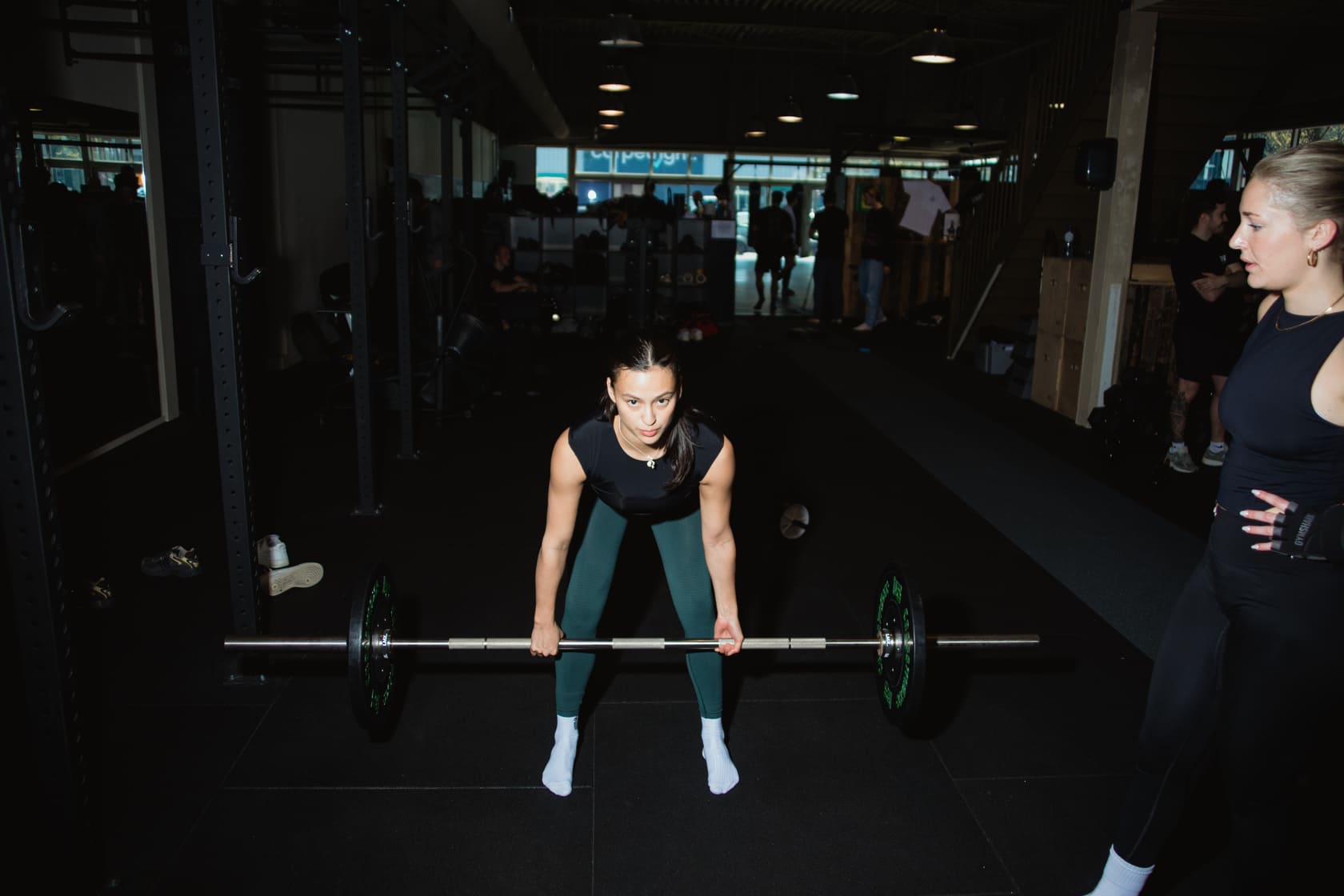
- Kracht: functionele bewegingen zoals squats, deadlifts en walking lunges.
- Hyrox-circuit: een mini-Hyrox waarin je kracht en cardio combineert.
Zo werk je tegelijk aan explosieve kracht, uithoudingsvermogen en mentale veerkracht.
What exercises belong to a Hyrox circuit?
Tijdens een officiële wedstrijd zijn er acht vaste onderdelen, altijd in dezelfde volgorde. Oefen deze daarom regelmatig in de sportschool, zodat je de juiste techniek beheerst:
- SkiErg (1000 m) – een ski-beweging die je hele lichaam aanspreekt, vooral je core en bovenlichaam.
- Sled Push – een zware slee vooruit duwen met volle inzet van je benen en armen.
- Sled Pull – een slee met gewicht naar je toe trekken, waarbij je veel kracht uit je rug haalt.
- Burpee Broad Jumps – sprongen van minimaal 1 meter na elke burpee.
- Roeien (1000 m) – een oefening die je hele lichaam aanspreekt, inclusief bovenlichaam en core.
- Farmer's Carry – wandelen met zware gewichten in beide handen.
- Sandbag Lunges – walking lunges met een zware zandzak op je schouders.
- Wall Balls – squatten en een zware bal omhoog gooien tegen een target.
Each exercise requires technique, explosive power and a steady heart rate.
How do you start training for your first Hyrox?
Wil je starten met je eerste Hyrox? Dan heb je een plan nodig. Begin daarom met deze stappen:
- Bouw eerst een goede basisconditie op met 2 tot 3 looptrainingen per week.
- Oefen vervolgens de functionele oefeningen uit de race in de sportschool.
- Start daarna met korte simulaties, bijvoorbeeld 1 km hardlopen + sled push, rust, en herhaal.
- Besteed bovendien aandacht aan sprongen, sprints en power-oefeningen voor je explosieve kracht.
- Zorg ten slotte voor voldoende rustdagen, want herstel maakt je sterker.
How do beginners train with a Hyrox training schedule?
Voor beginners geldt: consistentie en slim opbouwen zijn belangrijker dan meteen keihard gaan. Hieronder een voorbeeldplan voor 4 trainingsmomenten per week:
- Dag 1: interval hardlopen (6 × 400 m).
- Dag 2: krachttraining in de sportschool (squats, walking lunges, farmer's carry).
- Dag 3: rust of mobiliteit.
- Dag 4: duurloop van 5-7 km op een lagere hartslag.
- Dag 5: functionele krachttraining (sled push, sled pull, wall balls).
- Dag 6: Hyrox-circuit (1 km run + oefening, 3-4 rondes).
- Dag 7: rust.
Zo combineer je kracht en cardio op een manier die je stap voor stap sterker maakt.
How many weeks do you need for a Hyrox training schedule?
Gemiddeld hebben beginners 8 tot 12 weken nodig om zich goed voor te bereiden. In die periode bouw je spierkracht en explosiviteit op. Daarnaast verbeter je je coördinatie. En bovendien raak je gewend aan de intensiteit van de oefeningen.
Is 2 months enough to train for a Hyrox?
Ja. Voor sporters met een redelijke basisconditie is 2 maanden voorbereiding vaak voldoende. Houd dan deze richtlijnen aan:
- Train minimaal 3 tot 4 keer per week.
- Focus on functional exercises and interval training.
- Let bovendien op je voeding en herstel om optimaal te presteren.
For absolute beginners or those without running experience, 12 weeks is more realistic.
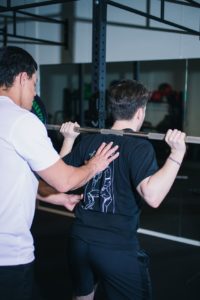
Can you train independently for a Hyrox?
Zeker. Je kunt jezelf prima zelfstandig voorbereiden. Houd daarbij rekening met het volgende:
- Train in een sportschool, zodat je de juiste materialen tot je beschikking hebt.
- Let goed op je techniek bij sled pushes, lunges en farmer's carry.
- Gebruik een hartslagmeter om je intensiteit te bewaken.
- Plan ten slotte voldoende rust in je schema.
Wil je naar een hoger niveau, of meedoen in de Pro-categorie? Dan kan een coach je trainingen verfijnen. Bij Gym Royale Amsterdam Noord word je begeleid door ervaren Hyrox-coaches.
Sample Hyrox training schedule (8 weeks)
Een complete weekindeling ziet er bijvoorbeeld zo uit:
- Maandag: intervaltraining hardlopen (explosiviteit + snelheid).
- Dinsdag: krachttraining onderlichaam (squats, walking lunges, sled push).
- Woensdag: rust of mobiliteit.
- Donderdag: duurloop van 6-8 km op een rustige hartslag.
- Vrijdag: krachttraining bovenlichaam (deadlifts, pull-ups, farmer's carry).
- Zaterdag: Hyrox-circuit (1 km run + oefening × 4 rondes).
- Zondag: rust.
Voor gevorderden kun je extra nadruk leggen op intervals, powerlifts en circuits op een hogere intensiteit.
Veelgestelde vragen over het Hyrox trainingsschema
Hoe vaak per week moet ik trainen voor Hyrox? Drie tot vier keer per week is ideaal. Combineer daarbij hardlopen, kracht en minstens één Hyrox-circuit.
Wat zijn de 8 onderdelen van Hyrox? SkiErg, Sled Push, Sled Pull, Burpee Broad Jumps, Roeien, Farmer's Carry, Sandbag Lunges en Wall Balls. Tussen elk onderdeel loop je 1 kilometer.
Hoelang duurt het om je voor te bereiden op een Hyrox? Gemiddeld 8 tot 12 weken. Met een redelijke basisconditie volstaan 8 weken; zonder loopervaring is 12 weken realistischer.
Kan ik als beginner zonder coach trainen voor Hyrox? Ja, dat kan zelfstandig. Een coach helpt vooral met techniek en het verfijnen van je schema richting een snellere tijd.
Conclusion
Een Hyrox training is dé manier om kracht, explosiviteit, conditie en uithoudingsvermogen te combineren. Voor beginners is een goed Hyrox trainingsschema de sleutel tot progressie: train consistent, leer de functionele oefeningen en combineer kracht en cardio slim.
Met 8 tot 12 weken voorbereiding, voldoende rust, de juiste voeding en focus op vooruitgang kan iedereen zijn of haar eerste Hyrox afronden. Wil je goed begeleid trainen? Plan een proefles bij Gym Royale Amsterdam Noord en zet vandaag de eerste stap.
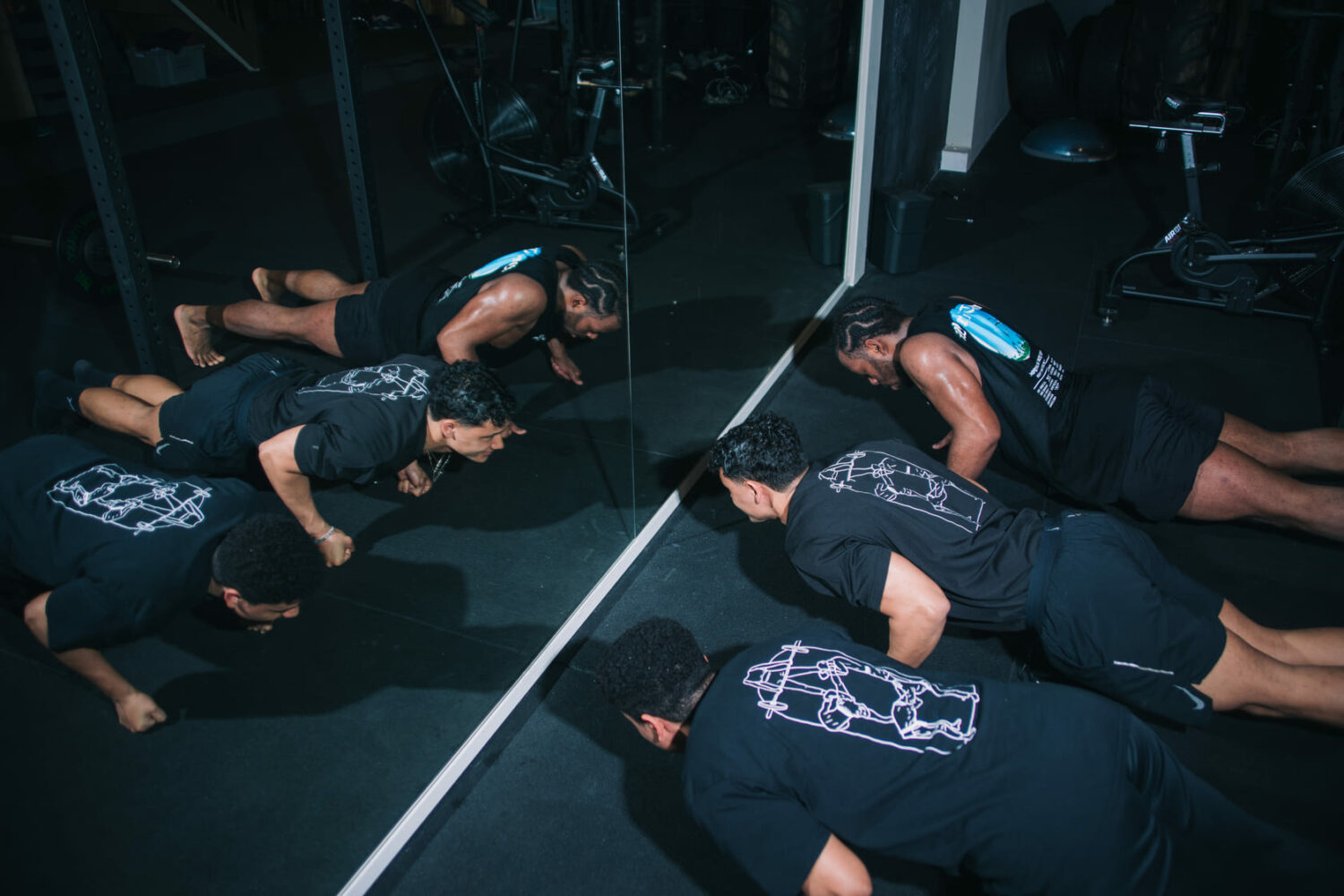
Hyrox vs. Crossfitt
Hyrox vs CrossFit: what are the differences?
The Discussion Hyrox vs. CrossFit is increasingly common. Both sports revolve around functional exercises, high intensity and a hefty physical challenge, but the main differences lie in structure and purpose. Whereas CrossFit is primarily a training method focused on all-around fitness, Hyrox is designed as a structured format: an international competition with a set format.
In this article, we compare Hyrox and CrossFit, discuss the benefits of both and help you determine what best suits you and your fitness goals.
What is Hyrox in a nutshell?
Hyrox focuses entirely on a set competition element: a race consisting of 8 times 1 kilometer of running, interspersed with functional movements such as the sled push, sled pull, burpee broad jumps, farmer's carry and wall balls with a heavy ball.
Because Hyrox always has the same course, you can directly measure your performance and compare it to others. This structured format makes it attractive to athletes who like structure, measurable progression and a clear goal.
For a detailed explanation, please read our article: What is Hyrox and how does a contest work?
What is CrossFit?
CrossFit, on the other hand, is a versatile training method that is all about variety. It combines:
- Strength training and weightlifting (deadlifts, cleans, snatches).
- Gymnastics (e.g., pull-ups, ring dips, handstand walks).
- Cardio (rowing, running, air bike).
The daily workouts - called the Workout of the Day (WOD) - differ each time. CrossFit focuses on a wide range of skills: strength, endurance, explosiveness, agility, coordination, flexibility and variation.
So CrossFit does not offer a set competition structure, but an all-around fitness approach that prepares you for all kinds of challenges.
Hyrox vs CrossFit: the main differences
When you look at the comparison between Hyrox and CrossFit, you see clear contrasts:
- Hyrox emphasizes a competition with a set structure → ideal for testing your performance and establishing measurable results.
- CrossFit offers a wide range of exercises and emphasizes versatility and overall fitness → perfect for those who want to develop in both strength and cardio.
- Hyrox focuses on a set format (running + 8 set exercises).
- CrossFit allows you to continuously experience new variety and address different fitness goals each time.
- Hyrox and CrossFit differ in accessibility: Hyrox is a competition you can work toward, CrossFit depends on the box and community where you train.
In short: Hyrox vs. CrossFit is all about structure vs. variety.
Training and preparation
Hyrox training
At Hyrox, the focus is on preparing your body optimally for a race. The emphasis is on:
- Running (lots of interval and endurance training).
- Functional strength (sled push, farmers carry, sandbag lunges).
- Structure: always the same exercises, so you can train in a focused way.
This will help you work purposefully toward your first Hyrox or a better result at a higher level.
CrossFit training
CrossFit emphasizes variety. You train a wide range of movements: push-ups, pull-ups, weightlifting, cardio and gymnastics. Every day there is a different the day's workout.
The focus in CrossFit is less on one competition and more on overall progress and all-around fitness. With the right guidance, CrossFit can prepare you for a variety of sports, including Hyrox.
Who is Hyrox suitable for?
- For athletes seeking a clear structure and concrete goal.
- For anyone who wants to measure their performance and see if they are ready for a successful race.
- For beginners who want to get in at their own level, as well as advanced students who want to move up to the next level.
- For athletes who like competition and a set format.
Who is CrossFit suitable for?
- For athletes who like variety and variety in their workouts.
- For people who want to work on versatility, strength, explosiveness, coordination and flexibility.
- For both beginners and experienced athletes who want to become broadly fitter.
- For people who enjoy working out in a community setting and being challenged by constantly changing workouts.
Can you combine CrossFit and Hyrox?
Sure. CrossFit is an excellent foundation for getting stronger, faster and more versatile. It helps improve your technique, explosiveness and functional strength. Many athletes use CrossFit to best prepare for Hyrox.
Hyrox, on the other hand, can help CrossFitters test their fitness in a structured competition.
Frequently Asked Questions
Which is better, CrossFit or Hyrox?
It depends on your goal. Do you want to work toward a concrete race with structured setup? Then Hyrox is a better fit. Instead, if you want to get broadly fitter with lots of variety and a wide range of skills, then CrossFit is a better choice.
Why are CrossFitters switching to Hyrox?
CrossFitters often make the switch to Hyrox because they want to concretely measure their progress in a race. The strength, explosiveness and conditioning they build with CrossFit training aligns perfectly with established Hyrox exercises such as the sled push, wall balls and burpees.
Why is Hyrox suddenly so popular?
Hyrox has grown in a short time due to its combination of accessibility (there are categories for both beginners and advanced exercisers), clear structure and focus on measurable performance. It offers a unique blend of cardio, strength and high-intensity functional movements.
Conclusion
The comparison Hyrox vs CrossFit shows that both sports have unique advantages:
- Hyrox emphasizes competition in a structured format, focused on testing your endurance and strength in set components.
- Instead, CrossFit offers a wide range of functional exercises, versatility and an approach that focuses on general all-around fitness and personal goals.
Which sport suits you best depends on your focus:
- Looking for structure, competition and concrete results? Choose Hyrox.
- Want variety, workouts full of variety and broad development? Choose CrossFit.
Hyrox: Shoes and gear
Hyrox: Shoes & Gear
Hyrox shoes & gear | Best Hyrox shoes and tips 2025
Discover the best Hyrox shoes for 2025. Compare Puma Deviate Nitro 3, Nitro Elite and other models with grip, stability and cushioning for your Hyrox race.
Hyrox shoes & gear: everything you need for the ultimate challenge
A Hyrox race is the ultimate challenge in the world of fitness racing. It combines running with tough functional exercises such as the sled push, farmers' carries, burpee broad jumps and wall balls. This unique combination requires not only training, but also the right Hyrox shoes and gear.
The right shoes offer good grip, excellent stability and good cushioning, making you perform better and less likely to get injured.
Hyrox shoes: why so important?
During a Hyrox race, you need to run as well as perform intense exercises. Hyrox shoes are specially designed to strike the perfect balance between strength and cardio. They provide stability for sled pushes and lunges, but also enough cushioning for the 8 km run.
Best running shoes vs. Hyrox shoes
Many beginners start with their best running shoes. While these have excellent cushioning and are comfortable while running, they often lack the stability and grip needed for sled pushes and farmer carries.
Therefore, for Hyrox, cross-trainers or hybrid shoes are often the better choice.
Puma Deviate: popular among Hyrox athletes
The Puma Deviate is a model often mentioned by Hyrox athletes. It combines lightweight design with stability and grip, making it suitable for both running and functional exercises.
Puma Deviate Nitro 3 for Hyrox
The Puma Deviate Nitro 3 is one of the latest models popular among Hyrox enthusiasts. This shoe is specially designed to make quick transitions between running and strength training.
- Sufficient grip for sled pushes.
- Excellent cushioning for 8 km of running.
- Good balance and added stability for farmer's carries.
Choosing correct Hyrox shoes
Choosing the right Hyrox shoes depends on your goals and running style. Always pay attention to these important considerations:
- Grip (for sled push and burpees).
- Stability (for lunges and carries).
- Cushioning (for running parts).
- Fit (comfort and support of your feet).
Deviate Nitro 3 Hyrox: the perfect balance
Many athletes see the Deviate Nitro 3 Hyrox as a perfect choice. The model is light, stable and provides excellent energy return. This helps you maintain both speed and power in a Hyrox race.
Best Hyrox shoes in 2025
The best Hyrox shoes are models that offer a unique combination of stability, grip and comfort. Popular options include:
- Puma Deviate Nitro 3
- Puma Deviate Nitro Elite
- Asics (known for good cushioning and fit)
- Adidas (lightweight, great grip, suitable for competition)
Puma Deviate Nitro Elite: ultimate performance
The Puma Deviate Nitro Elite uses carbon technology and the latest sole innovations. This shoe offers:
- Energy return for faster running.
- Good support for functional exercises.
- Lightweight design for increased speed and reduced fatigue.
Highly recommended for athletes looking to take their performance to the next level.
Best shoes for Hyrox training
The best shoes for Hyrox training are shoes that support you in both strength training and cardio. Consider models that offer stability for sled pushes, as well as comfort during endurance runs.
Best options are often cross-trainers or models designed specifically for hybrid sports such as Hyrox.
Best Hyrox: making the right choice
What is the best Hyrox shoe for you? That depends on your personal goals and training style. Do you mainly want speed when running? Then choose a model with carbon and extra energy return like the Puma Deviate Nitro Elite. Are you looking for stability and balance? Then the Puma Deviate Nitro 3 is a logical choice.
The right shoes and gear will really make a difference in your performance during the ultimate challenge of a Hyrox race.
Hyrox: Common mistakes made by beginners
Hyrox: Common mistakes made by beginners
Common Hyrox mistakes: this is what beginners often do wrong | Tips 2025
Discover the most common Hyrox mistakes among beginners. Learn how to train technique, pace, recovery and mental focus to be optimally prepared to run your first Hyrox race.
Common Hyrox mistakes among beginners
Hyrox is the combination of running and functional movements such as the sled push, wall balls, burpee broad jumps and the farmers carry. A Hyrox race demands the utmost both physically and mentally, and this is precisely where beginners often make mistakes. In this article you will read about the common mistakes and how to avoid them.
Common mistakes in Hyrox training
A major problem with Hyrox training is that beginners often start without a plan. They train randomly, focus too much on strength or just cardio, and forget to pay attention to technique and recovery.
Tip: Use a workout regimen that combines strength and conditioning.
Wall Balls: errors in execution
With wall balls, you often see beginners:
- pay too little attention to their balance sheet,
- Not throwing the ball at the correct height,
- Or relying too much on the arms instead of the legs.
Focus on a deep squat, use your legs and make sure your repetitions are fluid.
Hyrox race: underestimating intensity
During a Hyrox race, many beginners start too fast. The first kilometer feels light, but as the hard exercises follow, fatigue increases.
Tip: keep your pace and heart rate under control so you have energy left for the final laps.
Hyrox training: technique over strength
Hyrox is not just about brute strength. Without good technique in the 8 parts, you will lose time and risk injury.
Pay extra attention to your execution on squats, lunges and core exercises.
Sled Push: incorrect posture
One of the most common Hyrox mistakes is improper execution of the sled push. Beginners often push too high, lose stability and put unnecessary strain on their lower back.
Tip: Keep your torso low, put power from your legs and push with control.
Combine strength and cardio smartly
Many beginners make the mistake of doing only strength training or only running. However, success in Hyrox requires combining strength and cardio smartly.
Tip: Create circuits in which you alternate intervals of running with strength training such as lunges or sleds.
Burpee Broad Jumps: common mistakes
In burpee broad jumps, you see athletes making too small jumps, not hitting the ground with their chest, or losing rhythm.
Tip: Make sure each jump is at least one meter, and work on a smooth transition from burpee to jump.
Sled Pull: underrated exercise
The sled pull requires a lot of mental focus and strength from your shoulders and upper body. Beginners often pull with the arms alone, when in fact the core and legs need to work with them.
Tip: Keep the line tight, use your whole body and spread your strength over several repetitions.
Farmers Carry: wrong grip
In the farmers carry, many beginners lose balance because they choose kettlebells that are too heavy or do not train their grip. This leads to unstable posture and sometimes even injury.
Tip: Train your grip separately and choose a weight that is heavy but controllable. Keep your shoulders low and walk steady.
Burpee Broad: fatigue and loss of technique
During the burpee broad section, you see that many participants lose their technique due to fatigue. The jumps become smaller and the movements less controlled.
Tip: Train with intervals and work on your mental resilience so that you maintain your form even under fatigue.
Conclusion
Most common mistakes in Hyrox have to do with technique, pacing and balance between strength and cardio. By paying attention to exercises such as the wall balls, sled push, burpee broad jumps, sled pull and farmers carry, you will avoid mistakes and improve your performance.
With proper Hyrox training, adequate recovery and a structured plan, you will appear stronger and better prepared at the start of your first Hyrox race.
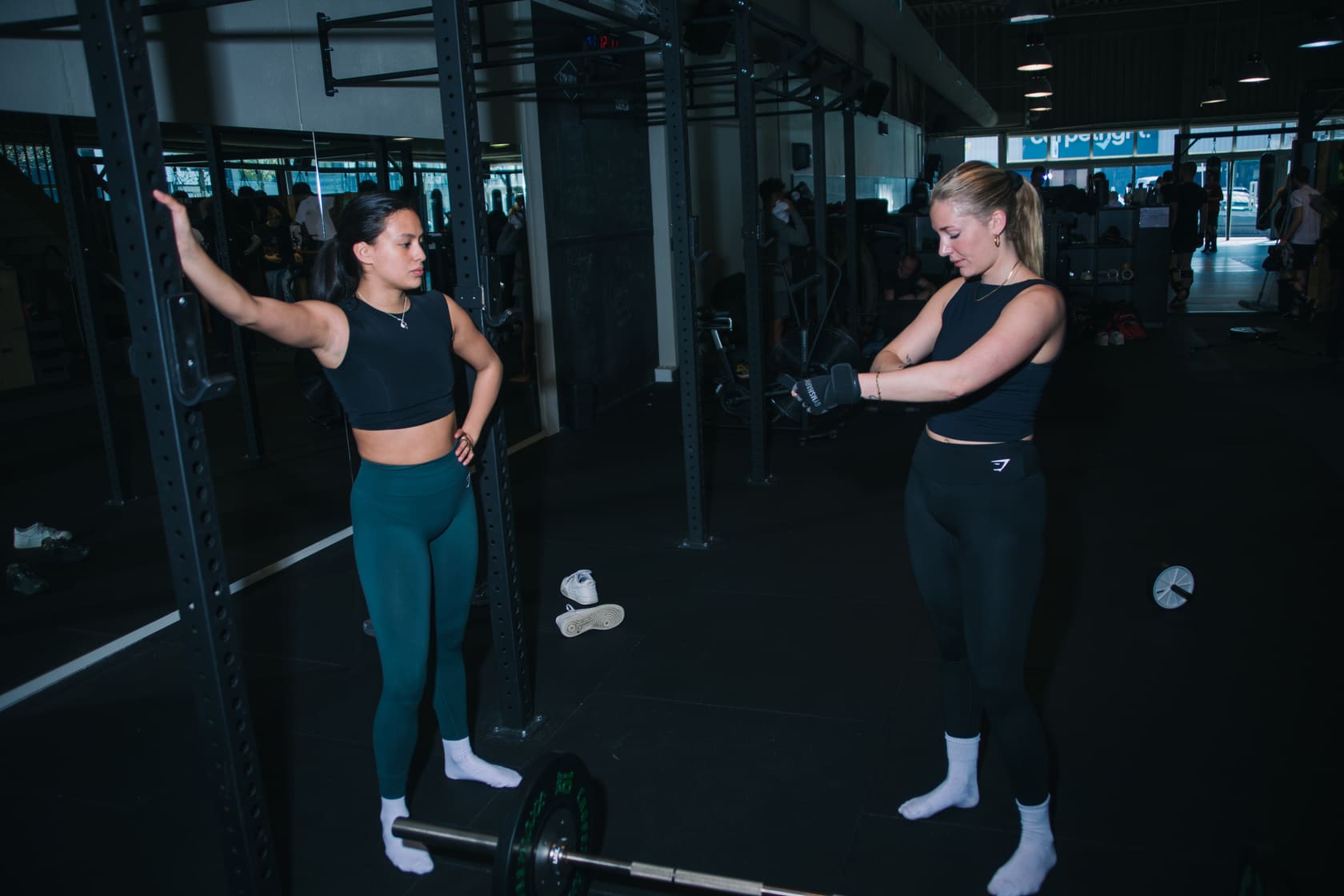
Hyrox: Nutrition & recovery
Hyrox: Nutrition and recovery
Nutrition & recovery Hyrox | Proper nutrition and optimal recovery
Nutrition Hyrox: find out what you eat during a Hyrox race, how to achieve optimal recovery in the days after and what the secret weapon is for success.
Nutrition & recovery at Hyrox: tips for optimal performance
A Hyrox race is a unique combination of running and functional fitness, where during a Hyrox race you alternate eight times 1 kilometer of running with eight tough exercises such as the sled push, rowing and wall balls. It is an intense effort that demands everything from your body.
To ensure optimal performance during the race, nutrition, hydration and recovery are just as important as the workouts themselves. The right fuel, adequate rest and a smart strategy will ensure more energy, less fatigue and optimal post-race recovery.
Nutrition Hyrox: the right fuel for performance
Nutrition Hyrox is all about energy, recovery and supporting your digestion during heavy exercise. Proper nutrition ensures that your body has enough glycogen and protein to function optimally and recover better after the race.
Preparing for your Hyrox race
Good preparation begins in the weeks before your Hyrox race:
- Complex carbohydrates (oatmeal, rice, sweet potato) to replenish energy stores.
- Protein (grilled chicken, fish, cottage cheese) for muscle recovery.
- Healthy fats and vegetables for antioxidants and minerals.
What do you eat during a Hyrox competition?
During a Hyrox race, it's all about light, fast-digesting carbohydrates. Choose bananas, energy bars or honey for instant energy. Avoid large amounts of fiber that your stomach does not tolerate as well.
Optimal recovery after Hyrox
Optimal recovery is at least as important as the workout itself. Within an hour of the race, take a recovery meal (e.g., smoothie or complete meal with rice, vegetables and chicken) and drink water with electrolytes immediately.
- Days after: light exercise or walking for active recovery.
- Get deep sleep: this is where your body makes growth hormones for muscle recovery.
Proper nutrition for faster recovery
The days afterward, proper nutrition is crucial for better recovery. Consider:
- Protein-rich meals for muscle mass and recovery.
- Extra carbohydrates to replenish energy stores.
- Smoothies with berries for antioxidants.
Days after: here's how to stay balanced
The days following a Hyrox are ideal for light strength training, mobility or yoga. This promotes blood flow and helps your body recover faster. Remember to replenish adequate fluids and minerals.
The secret weapon: sleep and consistency
The real secret weapon for peak performance is not a supplement or wonder drug, but sleep and consistency. During deep sleep, your body produces growth hormones that are essential for muscle recovery, energy levels and progress.
Conclusion
A Hyrox race requires not only training, but also smart choices in nutrition, recovery and rest.
- Beforehand: load up with complex carbohydrates and a complete meal.
- During: small amounts of fast carbohydrates and adequate hydration.
- Afterwards: focus on optimal recovery, proper nutrition and sleep.
This will increase your chances of a successful finish and an achievement you can be proud of.

Kickboxing for beginners
Kickboxing for beginners
Kickboxing for beginners: first lesson, tips & preparation.
Start kickboxing! Read all about kickboxing for beginners: initial training, proper equipment, practical tips and how often to exercise.
Kickboxing for beginners: everything you need to know
Kickboxing for beginners is often exciting: How does kickboxing work, what should you bring, and how do you properly prepare for your first workout? The great thing is: everyone starts somewhere. With the right preparation, practical tips and an open attitude, you can soon enjoy your first kickboxing class.
The first step: starting well prepared
Taking the first step is often the most difficult, but also the most important. For your first lesson, you don't need to be in good shape or have experience with boxing. No one expects you to be able to do everything right away.
What is important:
- Come well prepared in comfortable sportswear.
- Eat a light, healthy meal and do not train on a full stomach.
- Bring a bottle of water and a towel.
These practical tips will ensure that you are relaxed and confident about your first time.
Try different classes
Every gym teaches kickboxing differently. Sometimes the emphasis is on fitness training, other times on technique or even light sparring. It's smart to try different classes so you discover what suits you.
- Some classes focus mainly on punching bags and punching bag training.
- Other classes are more like boxing training, focusing on punches and footwork.
- For beginners, there are often separate groups where the intensity and pace are lower.
This is how you learn your preferences and can stay motivated to exercise.
Proper preparation and gear
For the first time, you can often borrow from the gym: gloves, bandages and sometimes shin guards. Still, it's wise to purchase your own gear after a few weeks.
Essential to have as a beginner:
- Boxing gloves: protect your knuckles from the blows of the punching bag.
- Bandages: give extra protection to your wrists and hands.
- Shin guards: useful once you start practicing kicks or sparring.
- Sportswear: make sure you have comfortable sportswear in which you can move easily.
With good equipment and your own gear, you train more pleasantly, hygienically and safely.
What to expect at your first kickboxing class
During your first workout or first kickboxing class, the build-up often looks like this:
- Warm-up: dynamic movement, jumping rope, push-ups and squats.
- Technique: practice simple punches and kicks with a trainer.
- Boxing bag training: perform combinations on the punching bag or with pads.
- Strength training: basic muscle strength exercises such as push-ups and sit-ups.
- Cooling-down: stretching and breathing to get the tension out of your body.
Important: beginners make mistakes, that's part of the game. Keep practicing and be patient - technique is learned step by step.
Is kickboxing a technical sport?
Yes, kickboxing is a technical sport. A trainer helps you with proper stance, punches and footwork. It is not only physically, but also mentally challenging. You learn to deal with intensity, focus and tension, as well as discipline and self-control.
Kickboxing how often as a beginner?
Many beginners wonder: how often is kickboxing going to be good for me? Training two to three times a week is ideal. This is how you build:
- Conditioning and endurance on.
- Muscle strength through repetition and strength training.
- Self-confidence, because you see progress step by step.
Exercising regularly will keep you motivated and reduce the risk of injury.
Sparring, competitions and advanced
As you progress, you can start sparring under the guidance of a trainer. In this you practice techniques against an opponent, but always with protection and control.
For those who wish to continue:
- You can grow into an athlete competing in the ring.
- For advanced students, the emphasis is more on mental strength, intensity and technique.
- But for most beginners, it's about having fun, exercising and gaining confidence in your own abilities.
Conclusion
Kickboxing for beginners is all about learning one step at a time. The first step is exciting, but with proper preparation, practical tips and using your own gear, every first time will be easier.
Remember: everyone starts somewhere. By taking different classes, continuing to train and seeing mistakes as learning moments, you will not only develop strength and conditioning, but also self-confidence and mental toughness.
Kickboxing is a sport that makes you stronger physically and mentally - and above all, it provides fun.
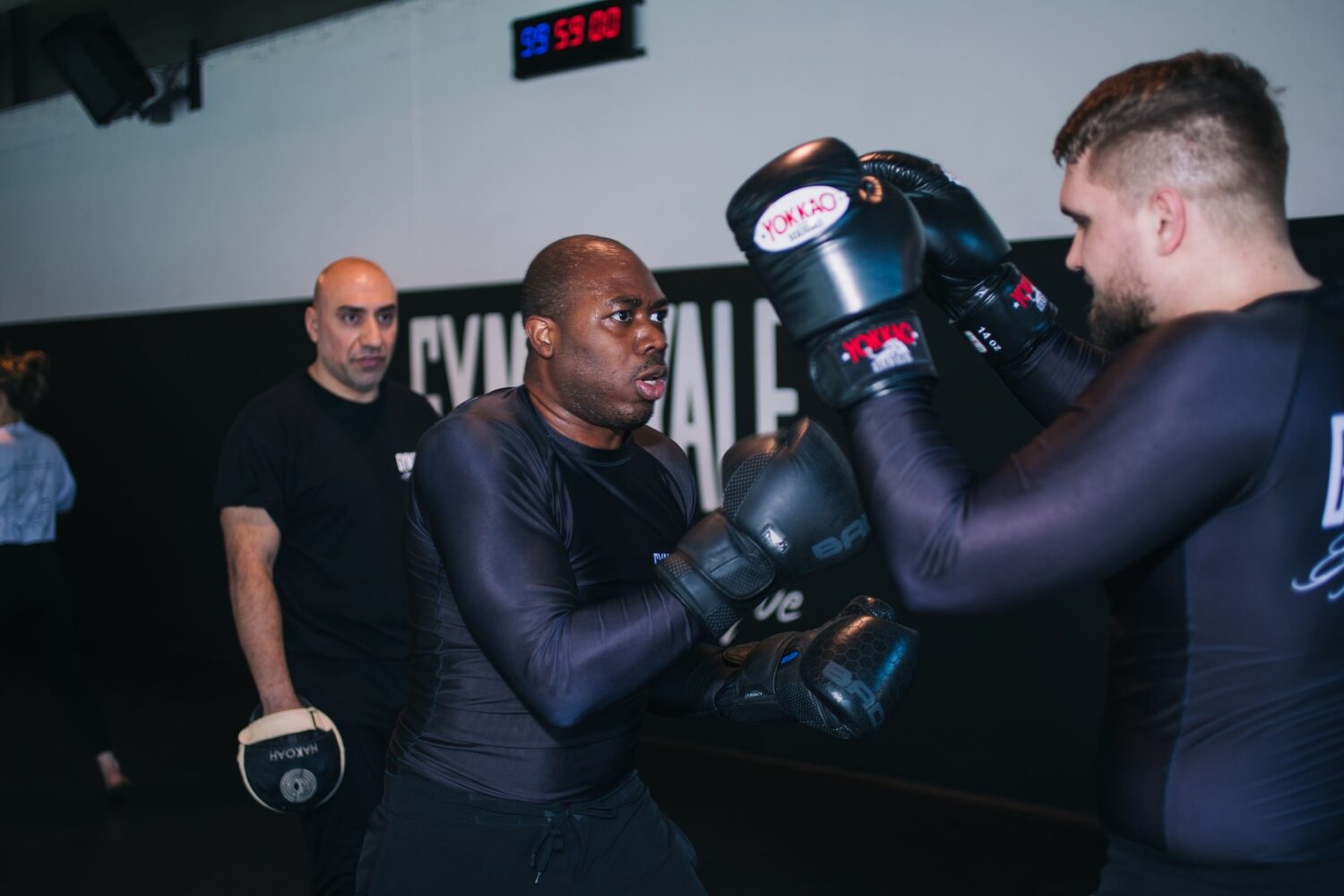
Kickboxing technique
Kickboxing Technique
Kickboxing techniques & exercises: punches, kicks and combinations
Discover key kickboxing techniques and exercises. Learn how to perform punches, kicks and combinations, improve your balance and train at home.
Kickboxing techniques & exercises: the most important basic techniques explained
Kickboxing is a dynamic sport that focuses on punches and kicks. To become a good kickboxer, you need to master the basic kickboxing techniques: from the correct basic stance to the execution of various punches and kicks. In this article you will learn the most important basic techniques, how to build a workout and what exercises you can do at home to get better.
Warming up and basic posture
A workout always starts with a warm-up. Think jumping rope, push ups, sit ups and shadow boxing. This is how you get your heart rate up and loosen up your muscles.
Getting the basic posture right is essential.
- Feet: stand on the ball of your foot, front foot slightly forward, back foot turned at an angle.
- Fists: your front hand and front fist protect your face, your back hand (often the dominant hand) is ready for powerful attacks.
- Elbow: keep your elbows close to your body, slightly bent elbow so that you do not give openings.
- Shoulders: relaxed but alert, always ready to follow a moving opponent.
Kickboxing techniques: the most important punches
Kickboxing has different types of punches. The most important punches that every beginner learns:
- Direct punch (straight punch): quick and effective, often with the front hand.
- Right direct: powerful punch with the back hand, usually aimed at the head or body.
- Hooks: round punch with bent elbow, effective in close combat situations.
- Uppercut: uppercut from below, ideal against an opponent leaning forward.
Direct punches are usually most effective for controlling distance, while a straight punch and right direct give a lot of power and impact.
Kickboxing techniques: kicking techniques
In addition to punches, you will learn different kicks. These different techniques make kickboxing versatile:
- Forward kick / front kick: direct kick with the front leg, ideal for making space.
- Low kick: kick with the back leg or front leg, usually aimed at the opponent's thigh.
- High kick (high kick): spectacular kick to the head, but requires sufficient range and technique.
- Side kick: powerful kick from the side, used to create power and distance.
- Round kick: rotating motion where the kick hits the body or head diagonally.
- Backward kick: surprising attack in which you kick backward toward an opponent.
- Defensive kick: intended to repel an attack and maintain balance.
With all kicking techniques, proper posture is crucial: rotate your hips, keep your toes pointed outward and make sure your balance is always paramount.
Combining basic techniques: punches and kicks
A good kickboxer doesn't just want to master single techniques, but above all to learn how to cleverly combine punches and kicks. Examples of most effectively applied combinations:
- Jab - cross - low kick.
- Direct punch - hook - high kick.
- Forward kick - straight punch - round kick.
By alternating both punches and kicks, you become more unpredictable and better able to respond to a moving opponent.
Training, balance and endurance
Kickboxing is more than just strength. It also requires endurance, balancing and the ability to react faster.
- Balance: keep your weight distributed between your front foot and back foot, staying light on the ball of your foot.
- Endurance: develop this with interval training, punching bag exercises and cardio.
- Extra strength: build up with push-ups, squats and boxing bag training.
- Technique: keep repeating and make sure you execute each punch and kick with precision.
Kickboxing exercises for home
Training at home helps keep your technique sharp. Good exercises are:
- Shadow boxing: work on technique and combinations against an imaginary opponent.
- Boxing bag training: use a punching bag to combine strength and conditioning.
- Sit-ups & push-ups: strengthen your core and upper body.
- Practicing kicking techniques on a punching bag: front kicks, side kicks, round kicks.
With regular home training, you will develop more control, extra strength and fitness.
Cooling down and recovery
After every workout, a good cool down is essential.
- Light movements: quiet shadow boxing or stepping.
- Stretching: focus on legs, shoulders and back.
- Breathing: breathe in and out deeply to release tension.
A cool down helps your muscles recover faster and prevents injuries.
Conclusion
The main basic kickboxing techniques consist of a mix of different punches (such as the direct punch, straight punch and right direct) and kicking techniques (such as the low kick, high kick, side kick, front kick and back kick). With the right basic posture properly and training balance, stamina and technique, you will become a good kickboxer.
Whether you're in the gym or at home in front of the punching bag: keep practicing, combining punches and kicks and follow these ultimate tips to get better step by step.