Je eerste proefles bij Gym Royale: zo bereid je je voor
Je eerste proefles bij Gym Royale: zo bereid je je voor
De stap zetten naar je eerste vechtsportles is spannend. Wat moet je aan? Moet je al fit zijn? Ga je meteen sparren? Die onzekerheid houdt veel mensen tegen, en dat is zonde. In deze gids nemen we al je twijfels weg, zodat je ontspannen en goed voorbereid naar je eerste proefles vechtsport in Amsterdam Noord komt bij Gym Royale Amsterdam Noord.
Je hoeft niet fit of ervaren te zijn
De grootste misvatting over beginnen met vechtsport is dat je eerst "in vorm" moet zijn. Het tegenovergestelde is waar: je komt juist om fit te worden. Iedereen begint op zijn eigen niveau, en goede trainers passen de intensiteit aan op de groep en op jou. Je hoeft dus geen enkele ervaring of conditie te hebben. De enige vereiste is de bereidheid om te beginnen.
Wat neem je mee naar je eerste proefles bij Gym Royale?
Voor vrijwel elke discipline volstaat eenvoudige sportkleding. Concreet:
- Comfortabele sportkleding waarin je goed kunt bewegen.
- Een bidon water om gehydrateerd te blijven.
- Een handdoek voor het zweet.
- Slippers voor naast de mat (vooral bij BJJ, in verband met hygiëne).
- Sportschoenen voor boksen, HYROX en S&C (bij BJJ en kickboks train je op blote voeten).
Specifieke spullen zoals handschoenen, scheenbeschermers of een kimono heb je voor een proefles meestal nog niet nodig. Vaak kun je materiaal lenen. Vraag het gerust van tevoren even na.
Moet ik meteen sparren?
Nee. Dit is misschien wel de belangrijkste geruststelling: bij een proefles ga je niet hard sparren. Je leert technieken, oefent op pads of de zak en went aan de bewegingen. Sparren is altijd optioneel en gebeurt pas als jij je er klaar voor voelt, in een gecontroleerde en veilige setting. Je bepaalt zelf je tempo.
Hoe ziet een typische proefles bij Gym Royale eruit?
Hoewel het per discipline verschilt, volgt vrijwel elke les een vaste opbouw. Je begint met een warming-up om je lichaam klaar te maken. Daarna volgt het technische gedeelte, waarin de trainer een techniek uitlegt en je deze oefent met een partner of op materiaal. Tot slot is er vaak een conditie- of krachtblok. Door deze structuur weet je altijd waar je aan toe bent, ook als beginner.
Tips voor een topervaring
- Kom op tijd: dan heb je rustig tijd om om te kleden en kennis te maken.
- Stel je voor aan de trainer: zeg dat het je eerste keer is, zo houden ze rekening met je.
- Luister naar je lichaam: het is geen wedstrijd. Neem rust wanneer nodig.
- Stel vragen: iedereen is ooit begonnen, vragen wordt gewaardeerd.
- Geniet ervan: de eerste les is vooral kennismaken en plezier hebben.
Na je proefles: hoe nu verder?
Beviel het? Dan kun je kijken welk lidmaatschap of welke disciplines bij je passen. Veel mensen combineren uiteindelijk meerdere sporten, bijvoorbeeld kickboksen met krachttraining, of BJJ met conditie. Het mooie is dat je rustig kunt ontdekken wat het beste bij jouw doelen en agenda past. Twijfel je nog over de keuze van discipline? Onze trainers denken graag met je mee.
Veelgestelde vragen over je eerste proefles
Moet ik me van tevoren aanmelden voor een proefles? Aanmelden is aan te raden, zodat we rekening met je kunnen houden en weten dat je komt.
Wat als ik helemaal geen conditie heb? Geen probleem. Je traint op je eigen tempo en bouwt je conditie geleidelijk op.
Kan ik materiaal lenen? Voor een proefles is vaak materiaal beschikbaar. Vraag het even na bij aanmelding.
Is een proefles geschikt voor alle leeftijden? Ja. Er zijn opties voor elk niveau en elke leeftijd, inclusief speciale lessen voor senioren 55+.
Plan je proefles bij Gym Royale Amsterdam Noord
Klaar om de eerste stap te zetten? Bij Gym Royale Amsterdam Noord word je vanaf je eerste les warm ontvangen en op jouw niveau begeleid. Plan je proefles en ontdek hoe leuk vechtsport is.

Kickboks techniek in Amsterdam Noord
Kickboks techniek in Amsterdam Noord: de basis voor beginners
Kickboksen is een van de populairste vechtsporten van Nederland, en niet zonder reden: het is intensief, leerzaam en geeft je binnen weken meer zelfvertrouwen en conditie. Wil je kickboks techniek leren in Amsterdam Noord? In deze gids behandelen we de belangrijkste basistechnieken en leggen we uit hoe een technische training bij Gym Royale Amsterdam Noord eruitziet.
Waarom techniek het fundament is van kickboksen
Veel beginners denken dat kickboksen draait om hard slaan. In werkelijkheid bepaalt techniek alles: balans, timing, afstand en zuivere uitvoering zijn belangrijker dan kracht. Goede techniek voorkomt blessures, maakt je sneller en zorgt dat je energie efficiënt gebruikt. Daarom besteden we bij elke les aandacht aan de juiste uitvoering, voordat we het tempo of de intensiteit opvoeren.
Kickboks techniek in Amsterdam Noord: footwork en houding
Alles begint met je houding. Een goede kickbokshouding betekent: handen omhoog ter bescherming van je kin, ellebogen naar binnen, knieën licht gebogen en je gewicht in balans op beide voeten. Vanuit deze houding leer je footwork: korte, gecontroleerde stappen waarmee je afstand creëert of juist verkleint. Wie zijn balans en footwork beheerst, legt de basis voor elke stoot en trap.
De belangrijkste stoten (punches)
De basisstoten in het kickboksen zijn de jab, de directe (cross), de hoek (hook) en de opstoot (uppercut). De jab is je snelste en meest gebruikte
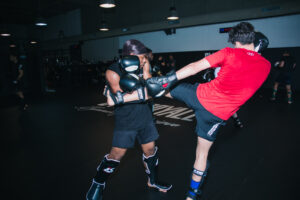
wapen om afstand te meten en je tegenstander bezig te houden. De cross is je krachtige achterhand. Hooks en uppercuts werken op korte afstand. Het draait niet om de armen alleen: kracht komt uit je heupen en het draaien van je lichaam.
De belangrijkste trappen (kicks)
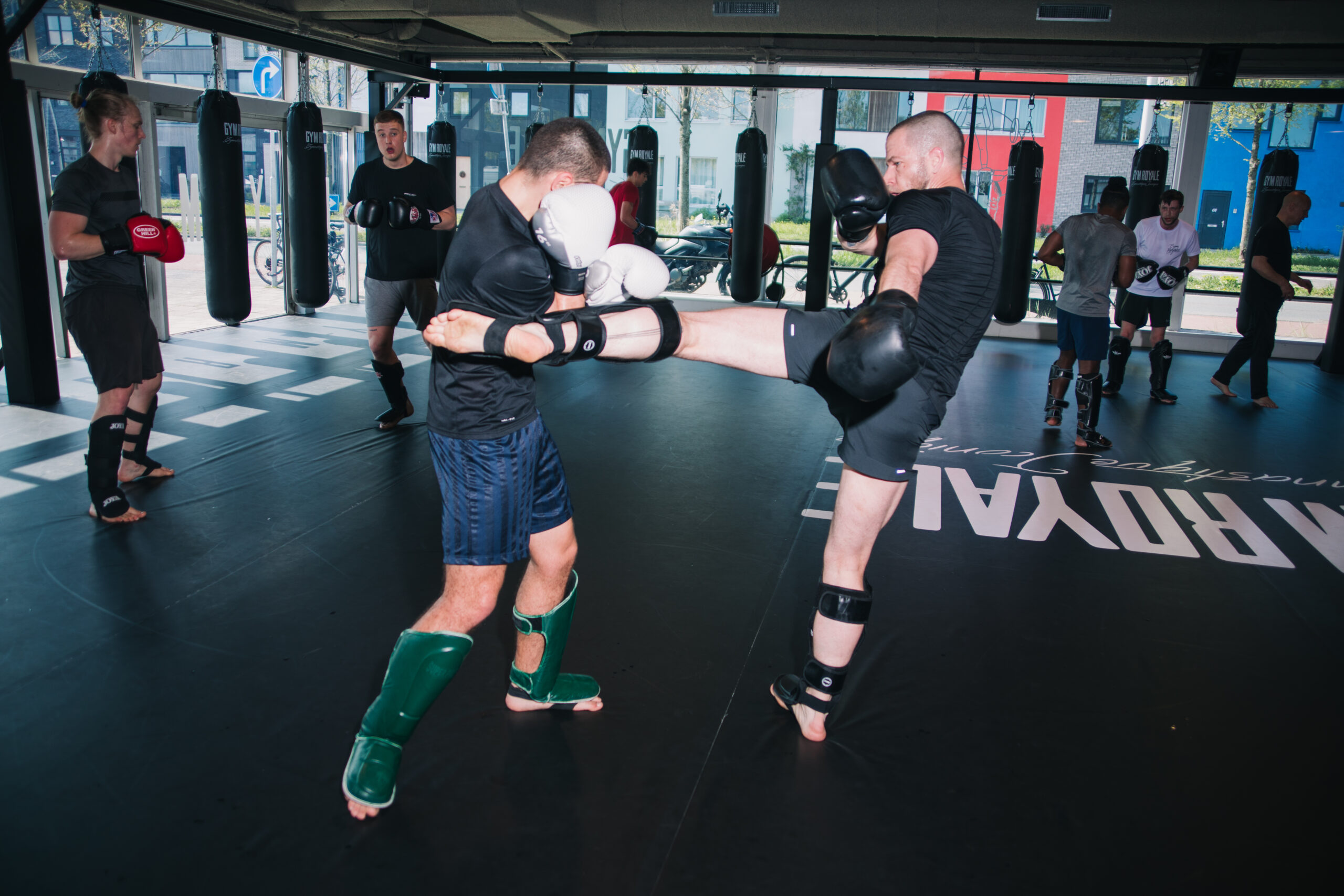
Kickboksen onderscheidt zich van boksen door de trappen. De belangrijkste zijn de low kick (trap tegen het bovenbeen), de middle kick (tegen het lichaam), de high kick (naar het hoofd) en de front kick of teep (om afstand te bewaren). Een zuivere trap komt uit het draaien van je standbeen en heup, niet uit het zwaaien van je been. Ook hier geldt: eerst techniek, dan kracht.
Stoten en trappen combineren
Zodra de losse technieken zitten, leer je combinaties: bijvoorbeeld jab-cross-low kick. Combinaties trainen je timing, coördinatie en ademhaling. Ze leren je ook vloeiend te schakelen tussen aanval en verdediging, wat de kern is van technisch kickboksen.
Hoe ziet een technische kickbokstraining eruit?
Bij Gym Royale Amsterdam Noord begint elke les met een warming-up en touwtjespringen voor coördinatie. Daarna volgt het technische blok, waarin je technieken oefent op pads of met een partner. We sluiten af met conditie- of krachtoefeningen. Beginners trainen veilig en zonder hard contact; je bepaalt zelf je tempo.
Voordelen van kickboks techniektraining
- Vetverbranding en conditie: een les verbrandt honderden calorieën.
- Zelfvertrouwen: je leert jezelf verdedigen en staat steviger in je schoenen.
- Stressverlichting: stoten en trappen zijn een geweldige uitlaatklep.
- Volledige work-out: je traint je hele lichaam, van benen tot core.
- Toegankelijk: geschikt voor elk niveau en elke leeftijd.
Veelgestelde vragen over kickboks techniek in Amsterdam Noord
Heb ik conditie nodig voordat ik begin? Nee. Je conditie groeit vanzelf mee. Iedereen begint op zijn eigen niveau.
Moet ik contact maken in de eerste lessen? Nee. Technieklessen draaien om uitvoering op pads en met een partner, zonder hard sparren.
Welke beschermingsmiddelen heb ik nodig? Voor techniektraining volstaan bokshandschoenen en scheenbeschermers. Wij adviseren je graag.
Hoe snel leer ik de basis? De meeste beginners beheersen de basistechnieken binnen enkele weken bij twee trainingen per week.
Leer kickboks techniek in Amsterdam Noord
Wil je kickboksen leren met de juiste techniek vanaf dag één? Bij Gym Royale Amsterdam Noord word je begeleid door ervaren trainers die techniek vooropstellen. Boek een proefles en ontdek hoe leuk en effectief kickboksen is.
Zaktraining in Amsterdam Noord
Zaktraining in Amsterdam Noord
De bokszak is misschien wel het beste trainingsmaatje dat je kunt hebben: hij klaagt nooit, slaat niet terug en helpt je keihard aan conditie, kracht en techniek. Zaktraining kickboksen in Amsterdam Noord is populair bij zowel beginners als gevorderden. In deze gids lees je wat zaktraining inhoudt, waarom het zo effectief is en hoe je er het maximale uithaalt bij Gym Royale Amsterdam Noord.
Wat is zaktraining in Amsterdam Noord?
Zaktraining (ook wel bokszaktraining of heavy bag training) is een vorm van kickbokstraining waarbij je stoten, trappen en combinaties uitvoert op een zware bokszak. Omdat je vol contact kunt maken zonder partner, is het ideaal om kracht, techniek en conditie te combineren in één intensieve work-out. Het is een van de meest toegankelijke manieren om de voordelen van kickboksen te ervaren.
Waarom zaktraining in Amsterdam Noord zo effectief is
Zaktraining werkt op meerdere vlakken tegelijk. Je verbrandt veel calorieën door de hoge intensiteit, je traint je hele lichaam en je verbetert je slagtechniek omdat je echt contact maakt. Daarnaast is het een fantastische uitlaatklep: weinig dingen voelen zo bevrijdend als een paar rondes vol op de zak. Het is bovendien laagdrempelig, want je traint op je eigen tempo zonder dat je tegen iemand hoeft te sparren.

De voordelen van zaktraining op een rij
- Conditie en uithoudingsvermogen: intervaltraining op de zak laat je hart pompen.
- Kracht en explosiviteit: vol contact bouwt slagkracht en power op.
- Techniekverbetering: je leert je gewicht goed te plaatsen en zuiver te raken.
- Vetverbranding: een intensieve zaksessie verbrandt honderden calorieën.
- Stressreductie: de zak is je beste therapie na een drukke dag.
Welke technieken train je op de zak?
Op de zak oefen je alle kickbokstechnieken: jabs, crosses, hooks, uppercuts, low kicks, middle kicks, high kicks en knietechnieken. Door deze te combineren in series train je je timing en ademhaling. Een typische oefening is bijvoorbeeld een combinatie van vier slagen gevolgd door een low kick, herhaald in rondes van twee tot drie minuten.
Zo haal je het maximale uit je zaktraining
Techniek gaat boven kracht. Sla niet zomaar zo hard mogelijk, maar focus op zuivere uitvoering en het draaien van je heupen. Werk in rondes (bijvoorbeeld 3 minuten werk, 1 minuut rust) om je conditie gericht te trainen. Houd je handen omhoog tussen combinaties door, alsof er een echte tegenstander voor je staat. En wikkel je handen goed in met bandages om je polsen en knokkels te beschermen.
Voor wie is zaktraining geschikt?
Zaktraining is voor iedereen, van complete beginner tot ervaren vechter. Je hebt geen partner nodig en je bepaalt zelf de intensiteit, waardoor het perfect is om mee te starten. Gevorderden gebruiken de zak juist om slagkracht en explosiviteit naar een hoger niveau te tillen.
Veelgestelde vragen over zaktraining kickboksen
Heb ik bokshandschoenen nodig voor zaktraining? Ja, gebruik bokshandschoenen en bij voorkeur ook bandages om je polsen en knokkels te beschermen.
Is zaktraining goed voor afvallen? Absoluut. De combinatie van kracht en cardio maakt het een uitstekende work-out voor vetverbranding.
Kan ik zaktraining doen als beginner? Zeker. Onze trainers leren je eerst de juiste techniek, zodat je veilig en effectief traint.
Hoe vaak per week zaktraining? Twee tot drie keer per week levert snel zichtbaar resultaat op qua conditie en kracht.
Train de bokszak bij Gym Royale Amsterdam Noord
Klaar om los te gaan op de zak? Bij Gym Royale Amsterdam Noord combineer je zaktraining met professionele begeleiding zodat je niet alleen hard, maar ook slim traint. Plan een proefles en voel het verschil na één sessie.
Afvallen met vechtsport Amsterdam Noord
Afvallen met vechtsport in Amsterdam Noord
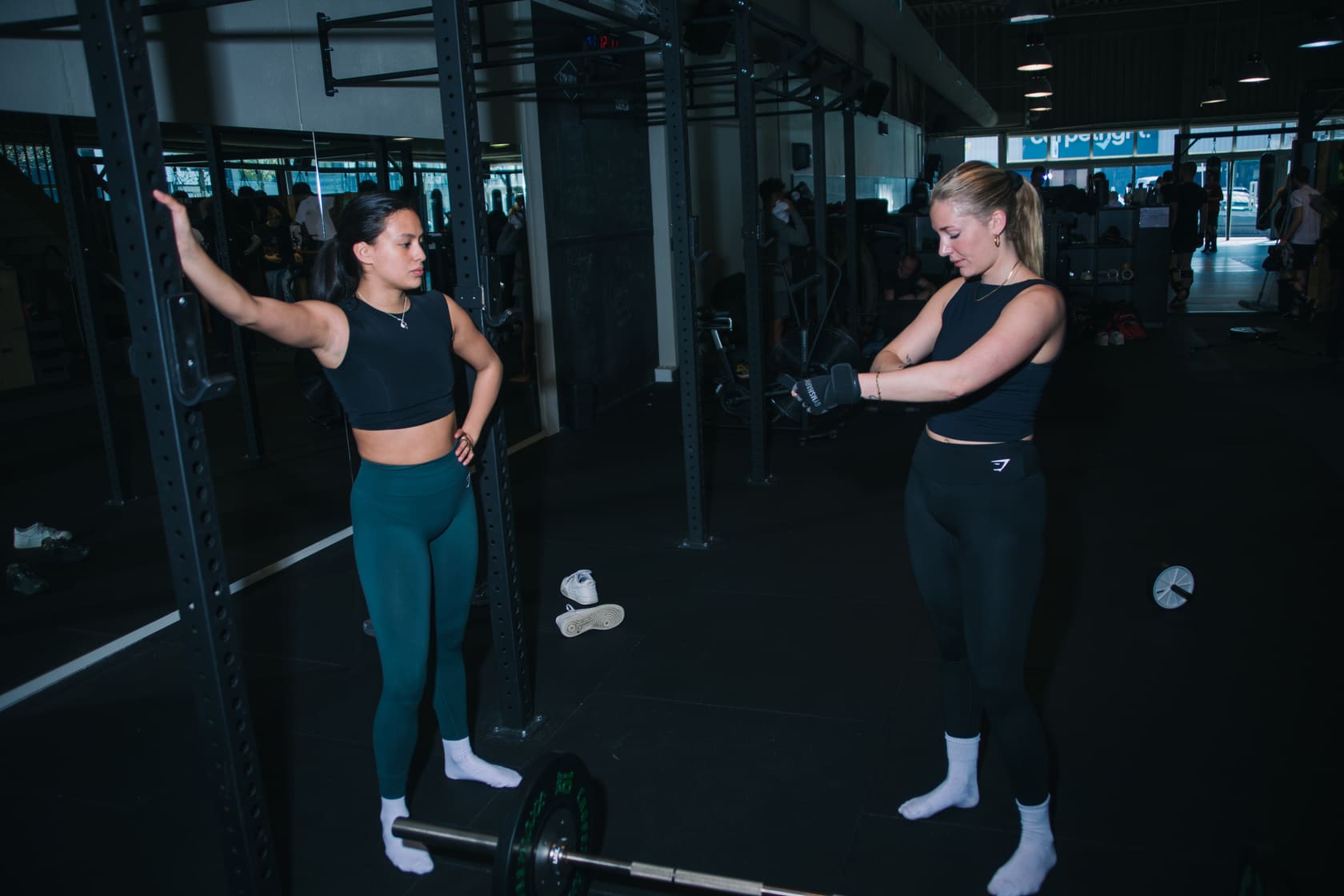
Eindeloos op de loopband staan is voor veel mensen een marteling. Geen wonder dat de motivatie snel wegzakt. Vechtsport biedt een veel leukere én effectievere route naar een fit en slank lichaam. In deze gids lees je over afvallen met vechtsport Amsterdam Noord en waarom een sport als kickboksen, boksen of BJJ je helpt om het ook echt vol te houden bij Gym Royale Amsterdam Noord.
Waarom vechtsport zo effectief is voor afvallen in Amsterdam Noord
Afvallen draait om een combinatie van calorieën verbranden, spiermassa opbouwen en consistentie. Vechtsport raakt alle drie. Een intensieve kickboks- of zaktraining verbrandt honderden calorieën per uur. Tegelijk bouw je functionele spiermassa op, die je stofwisseling verhoogt zodat je ook in rust meer verbrandt. En misschien wel het belangrijkste: vechtsport is zó leuk en afwisselend dat je blijft komen, en consistentie is de echte sleutel tot resultaat.
De beste vechtsport en disciplines voor afvallen  in Amsterdam Noord
 in Amsterdam Noord
 Niet elke training verbrandt evenveel, maar deze disciplines scoren hoog:
- Kickboksen en zaktraining: hoge intensiteit, veel calorieën, en een geweldige uitlaatklep.
- HYROX: de mix van hardlopen en kracht is een verbrandingsmachine met een duidelijk doel.
- Boksen: intensieve rondes en footwork laten je hart pompen.
- BJJ: een rol van vijf minuten voelt als een sprint en traint je hele lichaam.
- Strength & Conditioning: bouwt spiermassa die je stofwisseling blijvend verhoogt.
Vet verbranden én spieren opbouwen
Een veelgemaakte fout bij afvallen is alleen maar cardio doen. Daardoor verlies je naast vet ook spiermassa, wat je stofwisseling verlaagt. De kracht van vechtsport is dat je tegelijk cardio én krachtprikkels krijgt. Door bijvoorbeeld kickboksen te combineren met Strength & Conditioning verbrand je vet terwijl je spier behoudt of opbouwt, wat zorgt voor een strakker, sterker lichaam in plaats van alleen een lager getal op de weegschaal.
Het echte geheim: plezier en consistentie
De beste training is de training die je volhoudt. Veel mensen stoppen met sporten omdat het saai of een verplichting voelt. Vechtsport doorbreekt dat patroon. Je leert elke les iets nieuws, je traint in een gemotiveerde groep en je merkt snel vooruitgang in techniek én conditie. Die combinatie maakt dat sporten geen opgave maar een hoogtepunt van je week wordt, en juist dat zorgt voor blijvend resultaat.
Vergeet voeding en herstel niet
Afvallen gebeurt voor een groot deel in de keuken. Een gezond, gevarieerd voedingspatroon met voldoende eiwitten ondersteunt je training en je herstel. Slaap en rustdagen zijn net zo belangrijk: je lichaam wordt sterker tijdens het herstel, niet alleen tijdens de training. Een realistische, volhoudbare aanpak werkt altijd beter dan een streng crashdieet.
Voor wie is dit geschikt?
Afvallen en fit worden met vechtsport is voor iedereen, ongeacht je startpunt of conditie. Je traint op je eigen niveau en bouwt rustig op. Of je nu nog nooit hebt gesport of weer wilt beginnen na een lange pauze, je bent welkom en wordt op jouw niveau begeleid.
Frequently Asked Questions
Welke vechtsport is het beste om af te vallen? Kickboksen, zaktraining en HYROX verbranden veel calorieën. Combineer met krachttraining voor het beste resultaat.
Hoe vaak moet ik trainen om af te vallen? Twee tot drie keer per week, gecombineerd met gezonde voeding, levert zichtbaar resultaat op.
Moet ik al fit zijn om te beginnen? Nee. Je begint op je eigen niveau en je conditie groeit vanzelf mee.
Hoe snel zie ik resultaat? Met consistente training en goede voeding merk je doorgaans binnen enkele weken verschil in conditie en lichaam.
Word fit met vechtsport bij Gym Royale Amsterdam Noord
Klaar om af te vallen op een manier die je écht volhoudt? Bij Gym Royale Amsterdam Noord verbrand je vet, bouw je kracht op en heb je nog plezier ook. Plan een proefles en zet vandaag de eerste stap.
Strength & Conditioning in Amsterdam Noord
Strength & Conditioning in Amsterdam Noord
Of je nu kickbokst, BJJ traint of bokst: zonder een sterk en goed geconditioneerd lichaam loop je tegen je grenzen aan. Strength & Conditioning in Amsterdam Noord is de schakel die van een goede atleet een complete atleet maakt. In deze gids lees je wat S&C inhoudt, waarom het zo belangrijk is voor vechtsporters en hoe je er bij Gym Royale Amsterdam Noord mee aan de slag gaat.
Wat is Strength & Conditioning in Amsterdam Noord?
Strength & Conditioning in Amsterdam Noord is een gestructureerde vorm van training die kracht, explosiviteit, uithoudingsvermogen, mobiliteit en blessurepreventie combineert. Het is geen losse work-out, maar een doordacht programma dat je fysieke basis verbetert. Voor vechtsporters betekent dit: harder slaan, langer doorgaan, sneller herstellen en minder blessures.
Waarom Strength & Conditioning in Amsterdam Noord onmisbaar is voor vechtsporters
Vechtsporten vragen extreem veel van je lichaam. Je hebt explosieve kracht nodig voor een knockout-stoot, kracht-uithoudingsvermogen om vijf rondes vol te houden en een stabiele core om kracht over te brengen. S&C traint precies die kwaliteiten. Bovendien zorgt gerichte krachttraining ervoor dat je gewrichten, pezen en spieren bestand zijn tegen de belasting van sparren en wedstrijden, waardoor je minder snel uitvalt door blessures.
De pijlers van een goed S&C-programma
Een compleet S&C-programma bestaat uit meerdere onderdelen die elkaar versterken:
- Maximaalkracht: zware basisoefeningen zoals squats, deadlifts en pulls bouwen een sterke basis.
- Explosiviteit en power: sprongen, worpen en olympische lift-varianten maken je sneller en krachtiger.
- Conditie: intervaltraining bootst de inspanning van een wedstrijd na.
- Core-stabiliteit: een sterke romp brengt kracht over van je benen naar je vuisten.
- Mobiliteit en herstel: flexibiliteit en goede techniek voorkomen blessures.
S&C en periodisering
Topsporters trainen niet het hele jaar even hard. Met periodisering bouw je je training op in fases: van een opbouwfase met veel volume naar een fase gericht op kracht en explosiviteit, richting een wedstrijd. Zo piek je op het juiste moment en voorkom je overtraining. Ook recreatieve sporters profiteren van deze gestructureerde aanpak, omdat het zorgt voor continue progressie.
Voor wie is Strength & Conditioning?
S&C is niet alleen voor wedstrijdvechters. Ook als je puur voor je gezondheid, kracht en conditie traint, is een S&C-programma ideaal. Je bouwt functionele kracht op die je in het dagelijks leven merkt, je verbetert je houding en je verbrandt vet doordat spiermassa je stofwisseling verhoogt. Iedereen, van beginner tot gevorderde, kan op zijn eigen niveau instromen.
Hoe ziet een S&C-training eruit bij Gym Royale Amsterdam Noord?
Een sessie start met een dynamische warming-up en mobiliteitswerk. Daarna volgt het krachtgedeelte met basisoefeningen, gevolgd door explosieve oefeningen en conditiewerk. De trainer past de oefeningen en gewichten aan op jouw niveau en doelen. Techniek staat altijd voorop, zodat je veilig en effectief sterker wordt.
Veelgestelde vragen over Strength & Conditioning
Maakt krachttraining me langzaam of stijf voor vechtsport? Nee, integendeel. Goed uitgevoerde S&C maakt je juist sneller, explosiever en mobieler.
Heb ik ervaring met krachttraining nodig? Nee. Onze trainers leren je de juiste techniek van de basisoefeningen vanaf nul.
Hoe vaak moet ik S&C trainen naast mijn vechtsport? Twee S&C-sessies per week zijn voor de meeste sporters ideaal naast hun techniektrainingen.
Helpt S&C ook bij afvallen? Ja. Krachttraining bouwt spiermassa op en verhoogt je stofwisseling, wat vetverbranding ondersteunt.
Word sterker bij Gym Royale Amsterdam Noord
Wil je je vechtsport naar een hoger niveau tillen of gewoon sterker en fitter worden? Bij Gym Royale Amsterdam Noord train je Strength & Conditioning onder professionele begeleiding. Plan een proefles en leg de basis voor betere prestaties.
HYROX training Amsterdam Noord
HYROX is wereldwijd een van de snelst groeiende fitnesssporten en ook in Nederland explodeert de populariteit. Wil je HYROX training in Amsterdam Noord volgen of je voorbereiden op je eerste race? In deze gids leggen we uit wat HYROX precies is, uit welke onderdelen het bestaat en hoe je traint om de finish te halen bij Gym Royale Amsterdam Noord.
Wat is HYROX?
HYROX is een fitnesswedstrijd die hardlopen combineert met functionele kracht- en conditieoefeningen. Het format is overal ter wereld hetzelfde: je loopt 8 keer 1 kilometer, en tussen elke kilometer voer je een functioneel werkstation uit. Daardoor is HYROX uniek meetbaar, je kunt je tijd vergelijken met deelnemers over de hele wereld. Het is toegankelijk voor beginners maar uitdagend genoeg voor topatleten.
De 8 onderdelen van HYROX
Tussen de acht kilometers hardlopen door doe je deze acht stations, altijd in dezelfde volgorde:
- SkiErg (1000 meter)
- Sled Push (slede duwen)
- Sled Pull (slede trekken)
- Burpee Broad Jumps
- Rowing (1000 meter roeien)
- Farmers Carry (gewichten dragen)
- Sandbag Lunges (uitvalspassen met zandzak)
- Wall Balls (bal tegen de muur werpen)
De combinatie van hardlopen en kracht maakt HYROX een complete test van je uithoudingsvermogen, kracht en mentale weerbaarheid.
Waarom is HYROX zo populair?
HYROX slaat aan omdat het een duidelijk, haalbaar doel biedt. Anders dan een ongestructureerde work-out heb je een concreet evenement om naartoe te trainen. Het format is voor iedereen hetzelfde, dus je kunt je verbeteren en jezelf met anderen meten. Bovendien train je een mix van vaardigheden die je algehele fitheid enorm verbetert, en de community-sfeer rond HYROX werkt enorm motiverend.
Hoe bereid je je voor op HYROX?
Een goede HYROX-voorbereiding combineert drie elementen: hardloopvermogen, kracht-uithoudingsvermogen en het oefenen van de specifieke stations. Het belangrijkste is het trainen van "compromised running": hardlopen met vermoeide benen, direct na een krachtoefening. Daarnaast werk je aan je techniek op de stations, zodat je energie bespaart. Een gestructureerd programma met een opbouw richting de racedatum voorkomt blessures en zorgt dat je op je best presteert.
De voordelen van HYROX-training in Amsterdam Noord
- Complete fitheid: je traint kracht, cardio en uithoudingsvermogen tegelijk.
- Meetbare progressie: je tijden laten zwart-op-wit je vooruitgang zien.
- Motivatie door doelen: een racedatum houdt je scherp en consistent.
- Functionele kracht: de oefeningen vertalen zich naar het dagelijks leven.
- Community: samen trainen en racen maakt het extra leuk.
Voor wie is een HYROX-training geschikt in Amsterdam Noord?
HYROX is voor iedereen die van een uitdaging houdt, ongeacht je niveau. Er zijn categorieën voor beginners, gevorderden, koppels (doubles) en teams (relay), zodat je altijd op je eigen niveau kunt meedoen. Of je nu je eerste finish wilt halen of een scherpe tijd najaagt, je traint toe naar jouw doel. Op zoek naar een HYROX training in Amsterdam Noord? Plan een gratis proefles bij Gym Royale.
Veelgestelde vragen over HYROX
Moet ik al fit zijn om met HYROX te beginnen? Nee. Je traint je fitheid juist op door gericht naar een race toe te werken. Iedereen begint op zijn niveau.
Hoe lang duurt een HYROX-race? Afhankelijk van je niveau duurt een race grofweg tussen de 60 en 90 minuten.
Hoe vaak moet ik trainen voor HYROX? Drie tot vier gerichte trainingen per week zijn ideaal in de aanloop naar een race.
Heb ik speciale apparatuur nodig? Tijdens trainingen bij Gym Royale Amsterdam Noord gebruik je de juiste apparatuur en leer je de techniek van elk station.
Train voor HYROX bij Gym Royale Amsterdam Noord
Klaar om je eerste HYROX te halen of je tijd te verbeteren? Bij Gym Royale Amsterdam Noord bereid je je gericht voor met de juiste mix van hardlopen, kracht en stationtechniek. Plan een proefles en begin met aftellen naar de finish.
Yousri Belgaroui bij Gym Royale
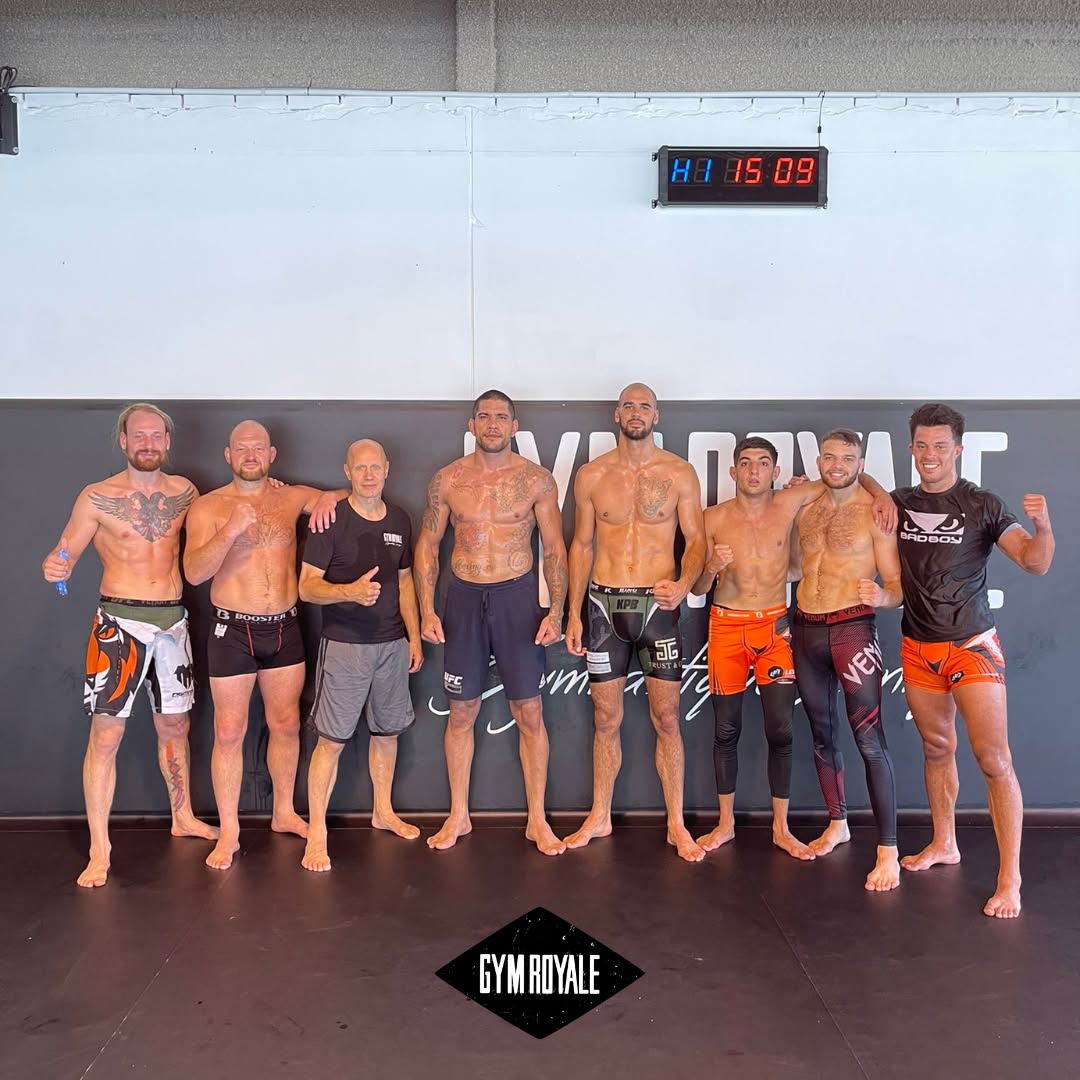
Niet elke sportschool kan zeggen dat er een UFC-vechter op de mat staat. Bij Gym Royale Amsterdam Noord kan dat wel. Yousri Belgaroui traint namelijk bij ons. Hij is een echte Amsterdammer en inmiddels actief in de UFC. In deze blog vertellen we daarom zijn verhaal. Bovendien lees je wat het betekent om Yousri Belgaroui bij Gym Royale aan het werk te zien.
Yousri Belgaroui traint bij Gym Royale
Yousri Belgaroui is een Tunesisch-Nederlandse vechter. Bovendien is hij geboren in Amsterdam, in 1992. Met zijn lengte van 1,96 meter en een enorme reach is hij een imposante verschijning in de middleweight-divisie. Daarnaast studeerde hij aan de Universiteit van Amsterdam. Zo laat hij zien dat topsport en discipline hand in hand gaan.
Van Glory-kickbokser tot wereldtop
Belgaroui maakte eerst naam in de kickbokswereld. Zo groeide hij in de prestigieuze Glory-organisatie uit tot een driewerf uitdager voor de wereldtitel. Onderweg deelde hij bovendien de ring met latere UFC-sterren. Zo vocht hij tegen Israel Adesanya. Daarnaast versloeg hij Alex Pereira in de finale van het Glory 40 Contender Tournament in 2017. Dat hij met deze latere kampioenen streed, zegt dan ook alles over zijn klasse. Uiteindelijk bouwde hij een kickboksrecord op van 27 overwinningen. Daarvan won hij er 13 door knock-out.
De overstap naar MMA en de UFC
Na zijn kickbokscarrière koos Belgaroui voor mixed martial arts. Daarvoor verhuisde hij een tijd naar de Verenigde Staten. Daar trainde hij bij Teixeira MMA, het team van oud-UFC-kampioen Glover Teixeira. Stap voor stap bouwde hij vervolgens een sterk MMA-record op. In oktober 2025 maakte hij ten slotte zijn UFC-debuut. Dat debuut won hij bovendien overtuigend, met een technische knock-out in de derde ronde tegen Azamat Bekoev. Zo zette hij meteen een statement neer op het hoogste podium.
Wat de aanwezigheid van Yousri Belgaroui bij Gym Royale betekent
Een vechter van dit kaliber in huis hebben is meer dan een mooie naam aan de muur. Het betekent namelijk dat de standaard hoog ligt. Bovendien is de trainingscultuur professioneel. Daardoor train je in een omgeving waar topsport tastbaar is. Je hoeft zelf trouwens geen prof te willen worden. Ook beginners profiteren namelijk van die mentaliteit. Zo zie je de discipline en techniek van topsport terug in hoe wij iedereen begeleiden.
Train waar Yousri Belgaroui bij Gym Royale traint
Kom je voor kickboksen, boksen, BJJ of conditie? Dan stap je een gym binnen waar serieus wordt getraind. Tegelijk is iedereen er welkom. De aanwezigheid van Yousri Belgaroui bij Gym Royale werkt bovendien inspirerend. Het bewijst namelijk dat het hoogste niveau bereikbaar is. Met de juiste begeleiding en toewijding kom je ver. En wie weet sta jij binnenkort op dezelfde mat.
Veelgestelde vragen over Yousri Belgaroui
Traint Yousri Belgaroui echt bij Gym Royale Amsterdam Noord? Ja. Yousri Belgaroui traint bij Gym Royale Amsterdam Noord.
In welke sport komt Belgaroui uit? Hij begon als kickbokser bij Glory. Inmiddels is hij MMA-vechter in de UFC, in de middleweight-divisie.
Heeft hij tegen bekende vechters gevochten? Jazeker. In zijn kickbokstijd vocht hij onder meer tegen Israel Adesanya. Bovendien versloeg hij Alex Pereira. Beiden werden later UFC-kampioen.
Kan ik als beginner ook bij Gym Royale trainen? Absoluut. Gym Royale Amsterdam Noord verwelkomt namelijk alle niveaus, van beginner tot gevorderde.
Stap binnen bij Gym Royale Amsterdam Noord
Wil je trainen in een gym met topsport-DNA? Bij Gym Royale Amsterdam Noord train je in een professionele en inspirerende omgeving. Bovendien is dat ongeacht je niveau of doel. Plan dus een proefles en ervaar de sfeer zelf.
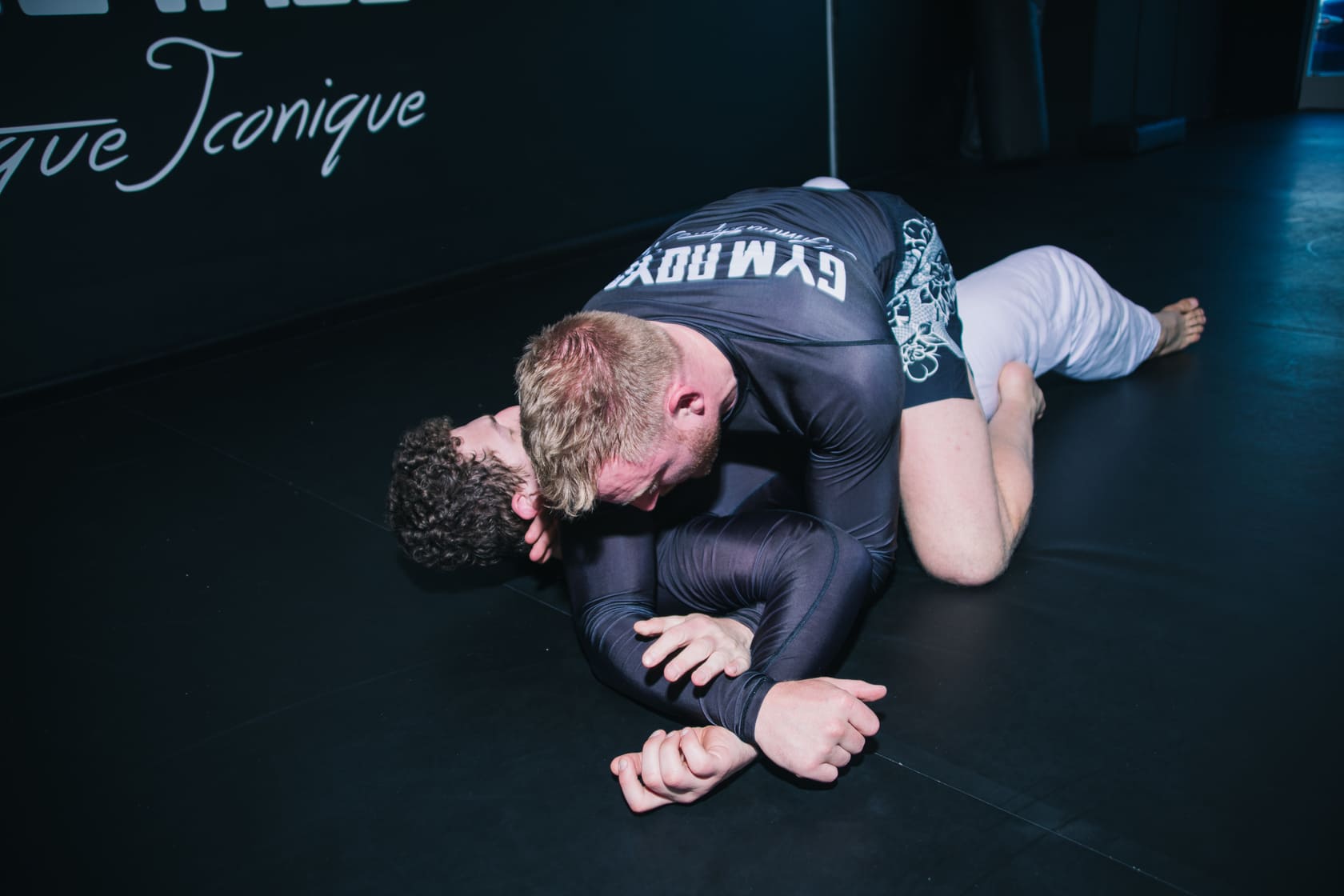
BJJ No-Gi Amsterdam-Noord
Brazilian Jiu Jitsu (BJJ) is een van de snelst groeiende vechtsporten van Nederland, en de No-Gi variant trekt steeds meer beginners aan. Zoek je een sportschool voor BJJ No-Gi in Amsterdam Noord? In deze gids leggen we uit wat No-Gi precies is, waarom het zo populair is en hoe je vandaag nog kunt starten bij Gym Royale Amsterdam Noord.
Wat is BJJ No-Gi?
BJJ No-Gi is Brazilian Jiu Jitsu zonder kimono (gi). In plaats van een traditioneel pak train je in een rashguard en korte broek of spats. Omdat je geen kraag of mouwen kunt vastpakken, ligt de nadruk op grip op het lichaam zelf, snelheid en lichaamscontrole. Het is een grappling-sport: je leert om een tegenstander naar de grond te brengen, te controleren en uiteindelijk te laten opgeven met een verwurging of klemtechniek (submission).
No-Gi versus Gi: wat is het verschil?
Het grootste verschil zit in de kleding en daarmee in de speelstijl. Bij Gi BJJ gebruik je het pak om te grijpen, te controleren en te submitten, wat het tempo vaak iets langzamer en technischer maakt. Bij No-Gi is alles gladder en sneller, omdat er minder grip is. Veel mensen trainen beide vormen omdat ze elkaar versterken: Gi maakt je technischer, No-Gi maakt je sneller en dynamischer. No-Gi sluit bovendien dicht aan bij MMA.
Voordelen van BJJ No-Gi voor beginners
BJJ No-Gi is om meerdere redenen ideaal als eerste kennismaking met grappling:
- Volledige work-out: je traint kracht, conditie, mobiliteit en coördinatie tegelijk.
- Realistische zelfverdediging: technieken werken ook zonder dat iemand kleding draagt.
- Mentale uitdaging: BJJ wordt vaak "menselijk schaken" genoemd vanwege de strategie.
- Stressverlichting: intensief sparren is een effectieve uitlaatklep na een drukke dag.
- Snelle progressie: je merkt al binnen enkele weken dat je technieken beter onthoudt.
Wat heb je nodig voor je eerste No-Gi les?
Beginnen is laagdrempelig. Voor je eerste les heb je alleen een rashguard (of een strak sportshirt), een korte sportbroek of spats en een bidon water nodig. Slippers voor naast de mat zijn handig in verband met hygiëne. Een mondbescherming is aan te raden zodra je gaat sparren. Verder zorgen wij voor de matten, de begeleiding en een veilige opbouw.
Hoe verloopt een training bij Gym Royale Amsterdam Noord?
Een typische les begint met een warming-up gericht op mobiliteit en grappling-bewegingen. Daarna volgt het technische gedeelte, waarin de trainer een specifieke positie of submission uitlegt en je deze stap voor stap oefent met een partner. De les sluit af met "rollen" (sparren), waarbij je het geleerde toepast in een gecontroleerde situatie. Beginners worden altijd op hun niveau begeleid, dus je hoeft geen ervaring te hebben om mee te doen.
Is BJJ No-Gi geschikt voor mij?
Of je nu 18 of 50 bent, fit of net begint: BJJ No-Gi is voor iedereen toegankelijk. Je traint op je eigen tempo en kiest zelf hoe intensief je spart. Het is een sport die je technisch laat groeien zonder dat brute kracht doorslaggevend is, wat het juist voor beginners en vrouwen aantrekkelijk maakt.
Veelgestelde vragen over BJJ No-Gi
Heb ik ervaring nodig om te starten met BJJ No-Gi? Nee. Bij Gym Royale Amsterdam Noord zijn beginners welkom en word je vanaf de basis begeleid.
Is BJJ No-Gi gevaarlijk? BJJ is een van de veiligere vechtsporten omdat er weinig stoten zijn. Je leert in een gecontroleerde omgeving en kunt altijd "tappen" (afkloppen) om een oefening te stoppen.
Hoe vaak per week moet ik trainen? Twee keer per week is een goede start om snel progressie te boeken zonder overbelasting.
Wat is het verschil tussen No-Gi en MMA? No-Gi is puur grappling (geen stoten), terwijl MMA ook stoot- en traptechnieken combineert. No-Gi vormt wel een belangrijke basis voor MMA.
Start met BJJ No-Gi in Amsterdam Noord
Wil je BJJ No-Gi uitproberen? Bij Gym Royale Amsterdam Noord train je in een professionele omgeving met ervaren begeleiding en een sterke community. Plan een proefles in en ontdek waarom zoveel mensen verslaafd raken aan grappling.
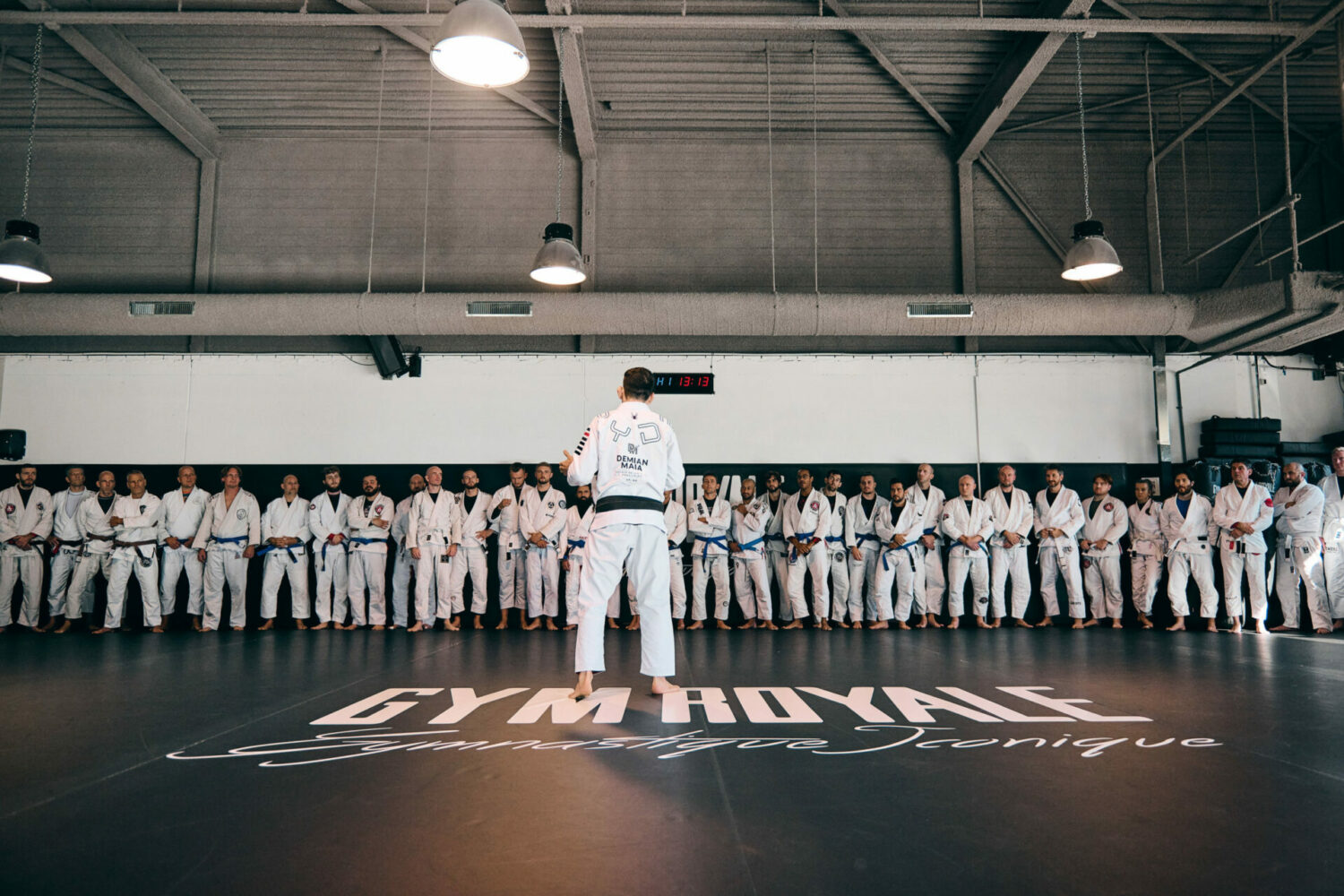
Jiu Jitsu vs Brazilian Jiu Jitsu
Jiu Jitsu vs Brazilian Jiu Jitsu: leer het verschil
Wanneer mensen bij Gym Royale binnenstappen, horen we vaak dezelfde vraag: wat is het verschil bij Jiu Jitsu vs Brazilian Jiu Jitsu? De namen lijken sterk op elkaar, maar toch gaat het om twee verschillende vechtsporten. Elk heeft namelijk een eigen doel en trainingsstijl. Als vechtsportschool in Amsterdam Noord leggen we graag uit wat beide stijlen inhouden. Zo ontdek je welke het beste past bij jouw doelen.
Wat is traditioneel jiu jitsu?
Jiu jitsu is een eeuwenoude Japanse vechtkunst, oorspronkelijk ontwikkeld als zelfverdedigingssysteem. De sport gebruikt een combinatie van worpen, grepen, klemmen en soms ook slagen en trappen. Het doel is om met techniek controle te krijgen over een aanvaller, in plaats van met brute kracht.
Kenmerken van jiu jitsu:
- Breed zelfverdedigingssysteem
- Mix van staande en grondtechnieken
- Minder nadruk op sparren
- Traditionele trainingsvormen
Jiu jitsu is dus veelzijdig, maar minder sportgericht dan BJJ.
Wat is Brazilian jiu jitsu (BJJ)?
Brazilian jiu jitsu richt zich op het grondgevecht. De sport is technisch opgebouwd en draait om hefboomwerking, timing en controle. In onze lessen in Amsterdam Noord leer je hoe je posities beheerst, hoe je ontsnapt en hoe je submissions toepast, zonder te slaan of te schoppen.
Kenmerken van BJJ:
- Grondgevecht en controle staan centraal
- Veel veilige en begeleide sparringsmomenten
- Duidelijke focus op techniek boven kracht
- Training in gi en no-gi
- Effectief voor sport én zelfverdediging
Voor veel beginners voelt BJJ toegankelijker, omdat elke techniek logisch wordt opgebouwd en direct toepasbaar is.
De belangrijkste verschillen bij Jiu Jitsu vs Brazilian Jiu Jitsu
| Onderdeel | Jiu jitsu | Brazilian jiu jitsu |
|---|---|---|
| Oorsprong | Japan | Brazilië |
| Focus | Breed zelfverdedigingssysteem | Grondgevecht en submissions |
| Slagen en trappen | Ja | Nee |
| Sparren | Minder gebruikelijk | Vrijwel elke training |
| Competitie | Beperkt | Wereldwijd groot |
| Toegankelijkheid | Traditioneel | Zeer geschikt voor beginners |
Is BJJ geschikt voor beginners?
De meeste leden van Gym Royale beginnen zonder enige ervaring. Omdat BJJ volledig draait om techniek en slimme positionering, boeken beginners snel vooruitgang. Je hoeft dus niet sterk of explosief te zijn. Bovendien bouwen we elke training logisch op, zodat iedereen veilig en op zijn eigen tempo leert.
Is BJJ geschikt voor vrouwen en kinderen?
Ja, BJJ is bijzonder geschikt voor vrouwen en kinderen, juist omdat het geen trap- of stootsport is. Het gebruik van hefboomwerking en lichaamscontrole maakt de sport toegankelijk voor ieder lichaamstype. Binnen Gym Royale trainen vrouwen en jongeren in een veilige, gestructureerde omgeving waarin respect en samenwerking centraal staan.
Is BJJ veilig?
Ja, BJJ is veilig wanneer het goed wordt aangeleerd. Binnen Gym Royale letten de trainers scherp op houding, belasting en intensiteit. Sparren gebeurt op niveau en stopt direct wanneer iemand tapt. Daardoor blijven de trainingen leerzaam en verantwoord, voor alle leeftijden.
Hoe ziet een BJJ-les eruit bij Gym Royale?
Een standaardtraining bestaat uit vijf onderdelen:
- Warming-up, gericht op bewegingen die je in de techniek terugziet.
- Uitleg van een techniek of serie technieken.
- Drills om de beweging te herhalen en te automatiseren.
- Sparren op niveau en onder toezicht.
- Cooling-down en ruimte voor vragen.
De sfeer is vriendelijk, gestructureerd en motiverend. Nieuwe leden voelen zich meestal snel op hun plek.
Waarom kiezen veel mensen voor BJJ bij Gym Royale?
BJJ biedt zowel fysieke als mentale voordelen. Je werkt aan conditie, kracht en flexibiliteit, maar ook aan focus, strategie en zelfvertrouwen. Veel leden geven aan dat BJJ hen helpt om stress te verminderen en meer balans te vinden. Daarnaast zorgt de open en hechte community in onze school voor een fijne, motiverende omgeving.
Veelgestelde vragen over Jiu Jitsu vs Brazilian Jiu Jitsu
Wat is het grootste verschil tussen jiu jitsu en BJJ? Jiu jitsu is een breed Japans zelfverdedigingssysteem met staande technieken, worpen en soms slagen. BJJ richt zich op het grondgevecht en submissions, zonder slaan of schoppen.
Welke is beter voor beginners? BJJ is voor beginners vaak toegankelijker, omdat elke techniek logisch wordt opgebouwd en je geen kracht of explosiviteit nodig hebt.
Kan ik BJJ doen zonder ervaring? Ja. De meeste leden starten zonder ervaring en leren stap voor stap op hun eigen tempo.
Is BJJ geschikt voor zelfverdediging? Zeker. BJJ leert je om controle te houden en jezelf te verdedigen met techniek in plaats van kracht.
Proefles Brazilian jiu jitsu bij Gym Royale
Wil je ontdekken of BJJ bij je past? Bij Gym Royale ben je welkom voor een proefles. Je hoeft geen ervaring of topconditie te hebben. Onze trainers begeleiden je stap voor stap, zodat je veilig en met plezier kunt starten.
Vraag een proefles aan en ervaar zelf wat Brazilian jiu jitsu voor jou kan betekenen.
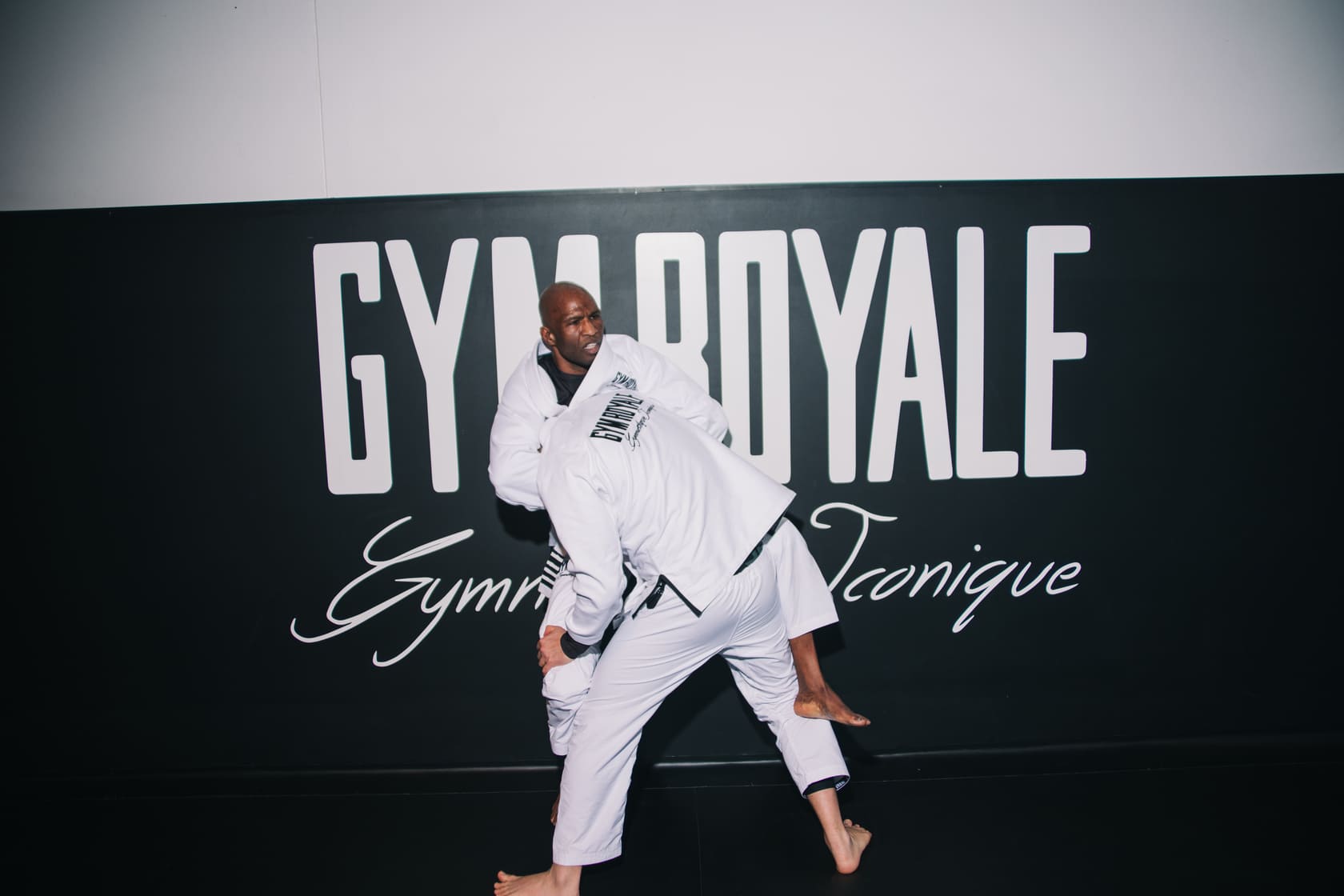
Basisprincipes en technieken van Brazilian Jiu Jitsu
Basisprincipes en technieken van Brazilian Jiu Jitsu
Basisprincipes en technieken van BJJ uitgelegd
Ontdek de kern van Brazilian jiu jitsu met duidelijke uitleg van posities en technieken. Begrijp BJJ snel en veilig. Volg een proefles bij Gym Royale Amsterdam Noord.
Brazilian Jiu Jitsu (BJJ) is een vechtsport die draait om techniek timing en controle. Veel nieuwe leden bij Gym Royale in Amsterdam Noord vragen zich af wat de sport precies inhoudt en welke basistechnieken je leert in de eerste maanden. In dit artikel leggen we de belangrijkste principes uit die elke BJJ-beoefenaar moet kennen. Deze vormen de basis van al het verdere werk op de mat.
Wat maakt BJJ anders dan andere vechtsporten
In tegenstelling tot de trap en stoot sporten richt BJJ zich op het grondgevecht. De sport gebruikt geen slagen of trappen maar werkt met posities hefboomwerking en submissions. Dit maakt BJJ toegankelijk voor iedereen ongeacht kracht, leeftijd of ervaring. Het uitgangspunt is dat een kleinere persoon met de juiste techniek een grotere tegenstander kan controleren.
De vier belangrijkste basisprincipes van BJJ
1. Controle gaat voor submissie
Een van de eerste lessen in BJJ is dat je altijd eerst controle zoekt voordat je een submissie probeert toe te passen. Controle betekent dat jij bepaalt waar het gevecht plaatsvindt en hoe je je tegenstander beperkt in zijn bewegingen.
Voorbeelden van controleposities zijn:
- mount
- side control
- back control
- closed guard
Het houden van controle geeft je stabiliteit veiligheid en tijd om je volgende stap te bepalen.
2. Gebruik van hefboomwerking in plaats van kracht
BJJ staat bekend om het gebruik van hefboomwerking. Je hoeft niet sterker te zijn dan je tegenstander om effectief te zijn. Door de juiste houding, druk en timing toe te passen kun je met weinig kracht veel effect bereiken.
Dit principe komt terug in:
- armklemmen
- strangulaties
- sweeps
- escapes
Het doel is efficiënt bewegen zonder energie te verspillen.
3. Positie voor transitie
Binnen BJJ draait alles om het verbeteren van je positie. Je probeert steeds te bewegen naar een positie waarin jij meer controle hebt en je tegenstander minder opties. Dit wordt vaak geleerd in een vaste volgorde zoals:
- guard
- half guard
- side control
- mount
- back control
Elke positie heeft zijn eigen aanvallen, ontsnappingen en strategieën. Hoe beter je de structuur begrijpt, hoe sneller je kunt schakelen tijdens sparren.
4. Ontsnappen is net zo belangrijk als aanvallen
Veel beginners focussen vooral op submissions maar echte vooruitgang komt wanneer je leert ontsnappen uit slechte posities. Escapes zijn essentieel voor zelfvertrouwen, veiligheid en techniekontwikkeling.
Belangrijke ontsnap (escape) concepten zijn:
- frames creëren
- heupbeweging
- ruimte maken
- richting bepalen
Goede escapes maken je minder voorspelbaar en minder kwetsbaar.
De belangrijkste basistechnieken voor beginners
In de eerste maanden bij Gym Royale leer je de kerntechnieken die in alle vervolgtrainingen terugkomen. Deze vormen de ruggengraat van BJJ.
Guard
De guard is de positie waarin jij onderop ligt maar je tegenstander tussen je benen of knieën houdt. Ondanks dat je onderop ligt kun je vanuit guard controle houden en aanvallen.
Voorbeelden van guardvarianten:
- closed guard
- open guard
- half guard
Beginners leren hoe ze balans verstoren grips gebruiken en sweeps inzetten.
Mount
Mount is een positie waarin jij bovenop zit met je knieën aan weerszijden van de romp van je tegenstander. Dit is een dominante positie waarmee je veel controle hebt. Vanuit mount kun je werken naar:
- armklemmen
- strangulaties
- overgang naar back control
Het doel is stabiliteit houden en druk opbouwen.
Side control
In side control lig je dwars boven je tegenstander. Dit geeft je veel controle en verschillende opties voor aanvallen en transities. Beginners leren hier vooral druk houden en voorkomen dat de tegenstander kan draaien of ontsnappen.
Back control
Back control is een van de meest dominante posities in BJJ. Je hebt controle over de rug en kunt sterk sturen met hooks en seatbelt grip. Vanuit deze positie werk je naar strangulaties zoals:
- rear naked choke
- bow and arrow choke
Back control is technisch uitdagend maar zeer effectief.
Submissions voor beginners
De eerste submissions die je leert bij Gym Royale zijn:
- armbar
- triangle choke
- kimura
- rear naked choke
Elke submission heeft een duidelijke technische opbouw en vereist goede controle voordat je de aanval maakt. De nadruk ligt altijd op veiligheid en correcte uitvoering.
Waarom deze basis zo belangrijk is
BJJ is een sport waarin je constant groeit. Wie de basisprincipes goed begrijpt kan sneller schakelen tijdens sparren en beter vooruitgang boeken. De sport voelt als een puzzel die je stukje bij beetje leert oplossen. Bij Gym Royale begeleiden we je in elke stap zodat je de technieken op een veilige en gestructureerde manier ontwikkelt.
Beginnen met de basistechnieken van BJJ bij Gym Royale
Wil je zelf ervaren hoe deze principes werken. Bij Gym Royale in Amsterdam Noord kun je een proefles volgen waarin je direct kennismaakt met de basistechnieken. Je hoeft geen ervaring te hebben. Wij zorgen voor een veilige en duidelijke introductie.
Vraag een proefles aan en ontdek hoe Brazilian jiu jitsu werkt in de praktijk